

All work
Bufandopia
A QR code on every scarf, a map for whoever wants to bring me the next one, and a product taken to production with AI.
- Product Designer
- Web museum of my football scarf collection
- 2026
- Just me, with an AI coding assistant
- Built in August and September 2026, still growing
- Concept, product design, data and build
In short
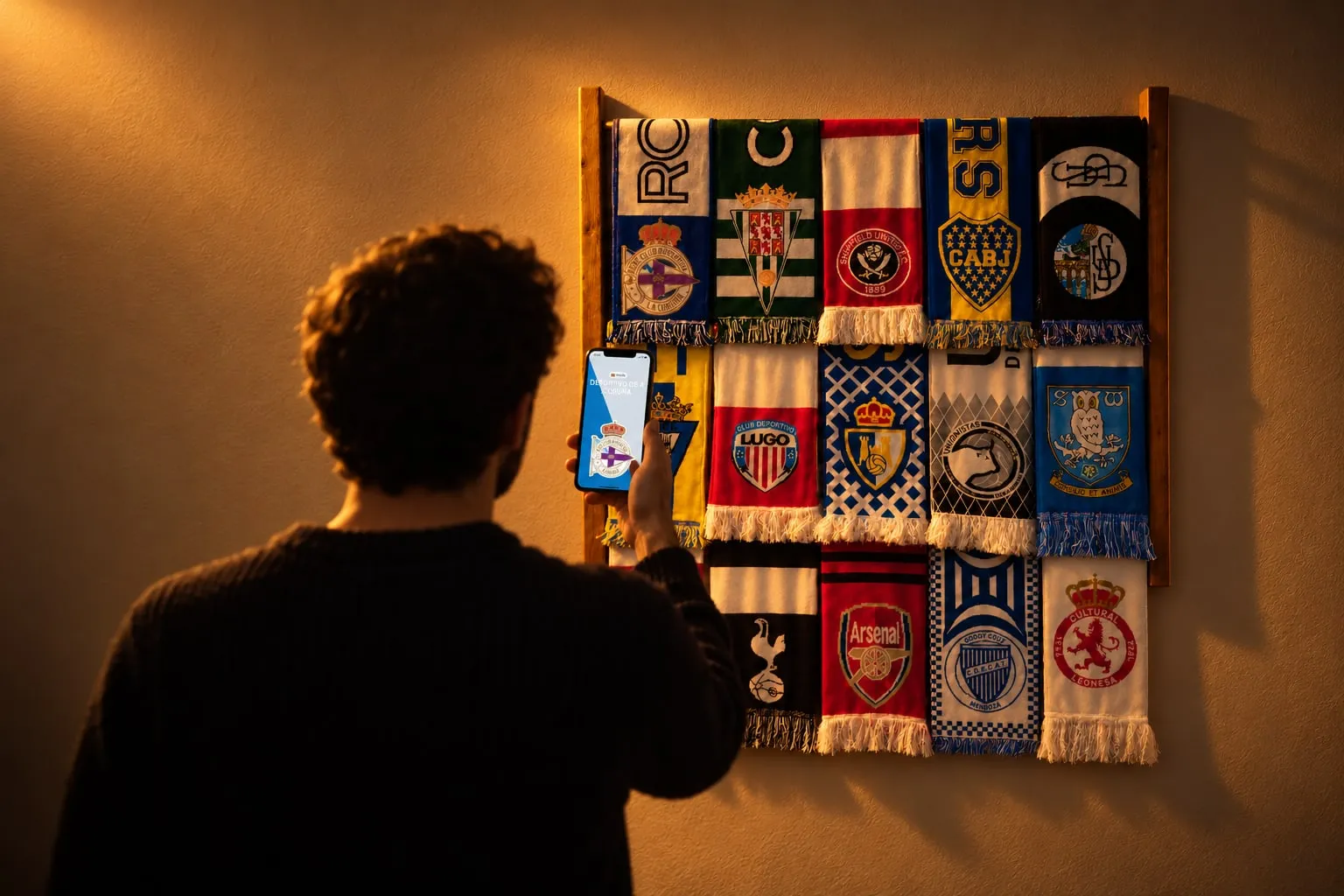
Bufandopia is the web museum of my football scarf collection. Every scarf on my wall has a QR code that opens its own page, family and friends have a map to find the next one, and I run it all from a private panel. I designed it and took it to production without writing the code myself, working with an AI coding assistant.
- 31
- 966
- 3
- 77
- 5.9K
- 1
The context
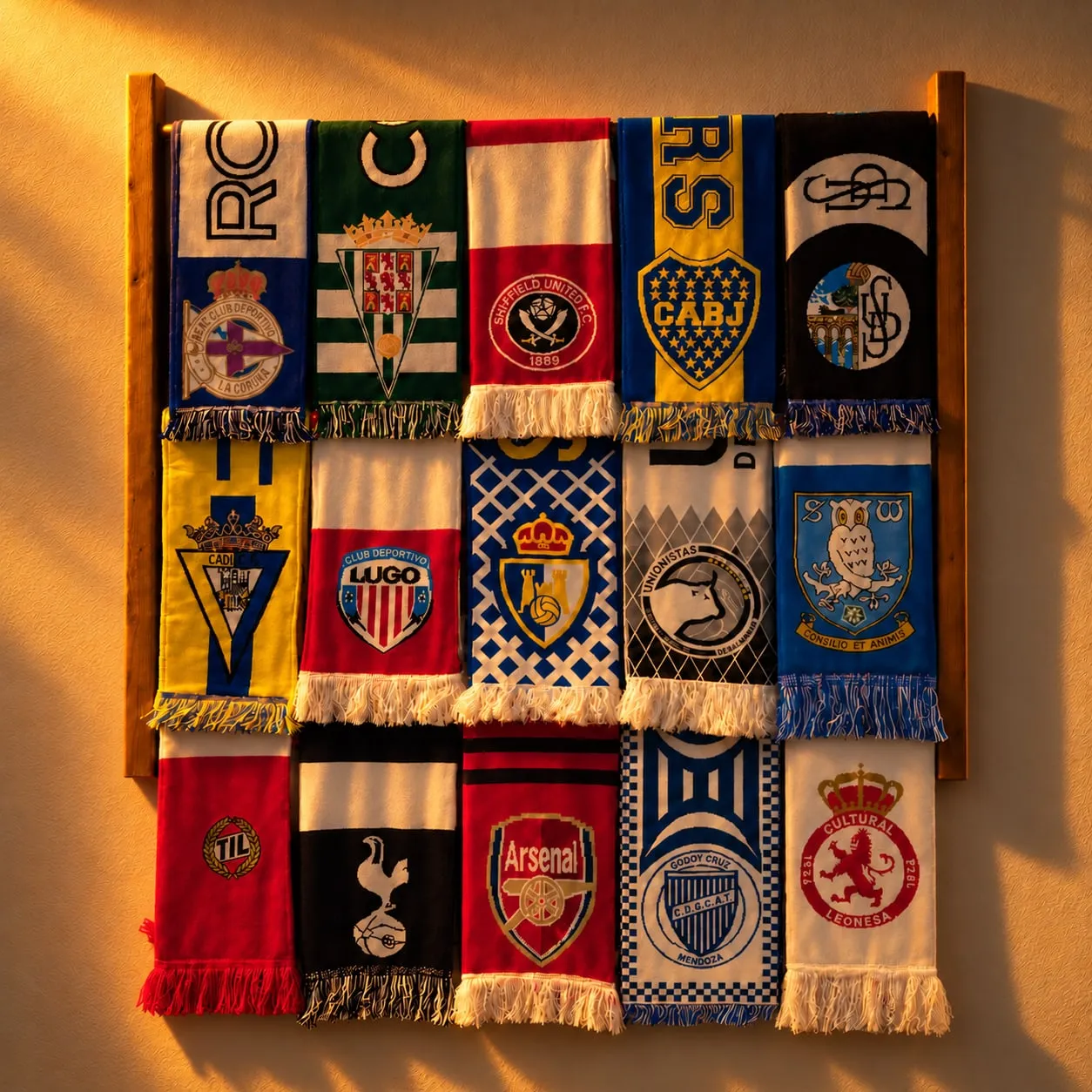
I collect football scarves because football and design are two things I cannot leave alone, and what I like most about clubs is their identity: crests, colours and the stories behind them. When I travel I go to see the local ground, and the scarf is what I bring back.
The first one came from the 2018 Copa Libertadores final in Madrid, where I ended up in the Boca Juniors end. The collection proper started years later in Sheffield, with a Sheffield United scarf and a visit to the world’s oldest professional football ground. Then, after visiting the city’s other club, Sheffield Wednesday, and learning the story behind its name, I decided to collect more than scarves: I wanted to collect stories.
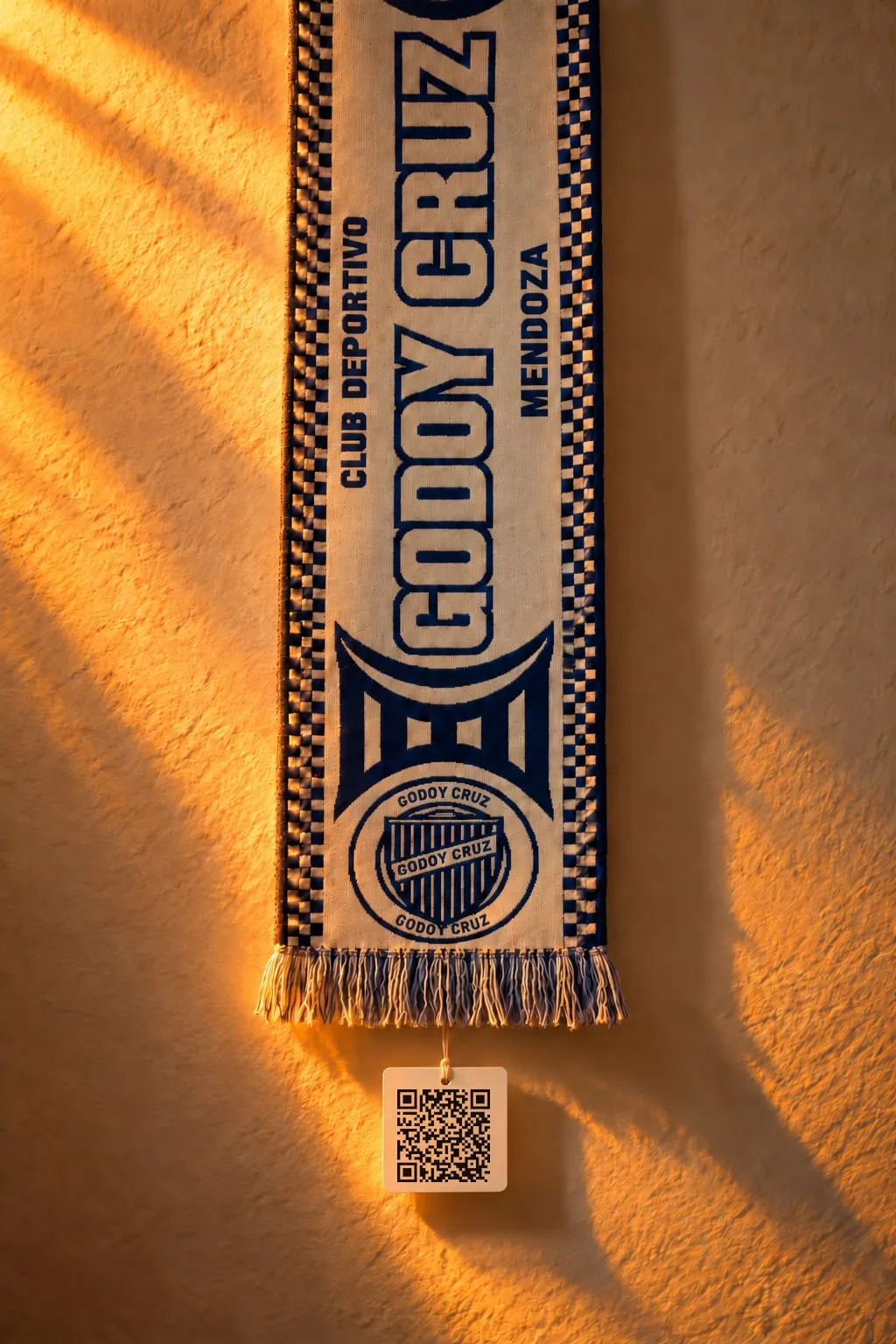
The first idea was a paper tag on every scarf. A QR code was better: nothing to reprint when the text changes, and room for far more than a tag can hold.
Then other people joined in. My partner came back from Norway with a Tromsø scarf, fact included. My parents, retired and travelling in a camper van, found in it the answer to what to bring me. But they do not follow football: they had no way of knowing which clubs were nearby, which ones count for the collection or where the ground is.
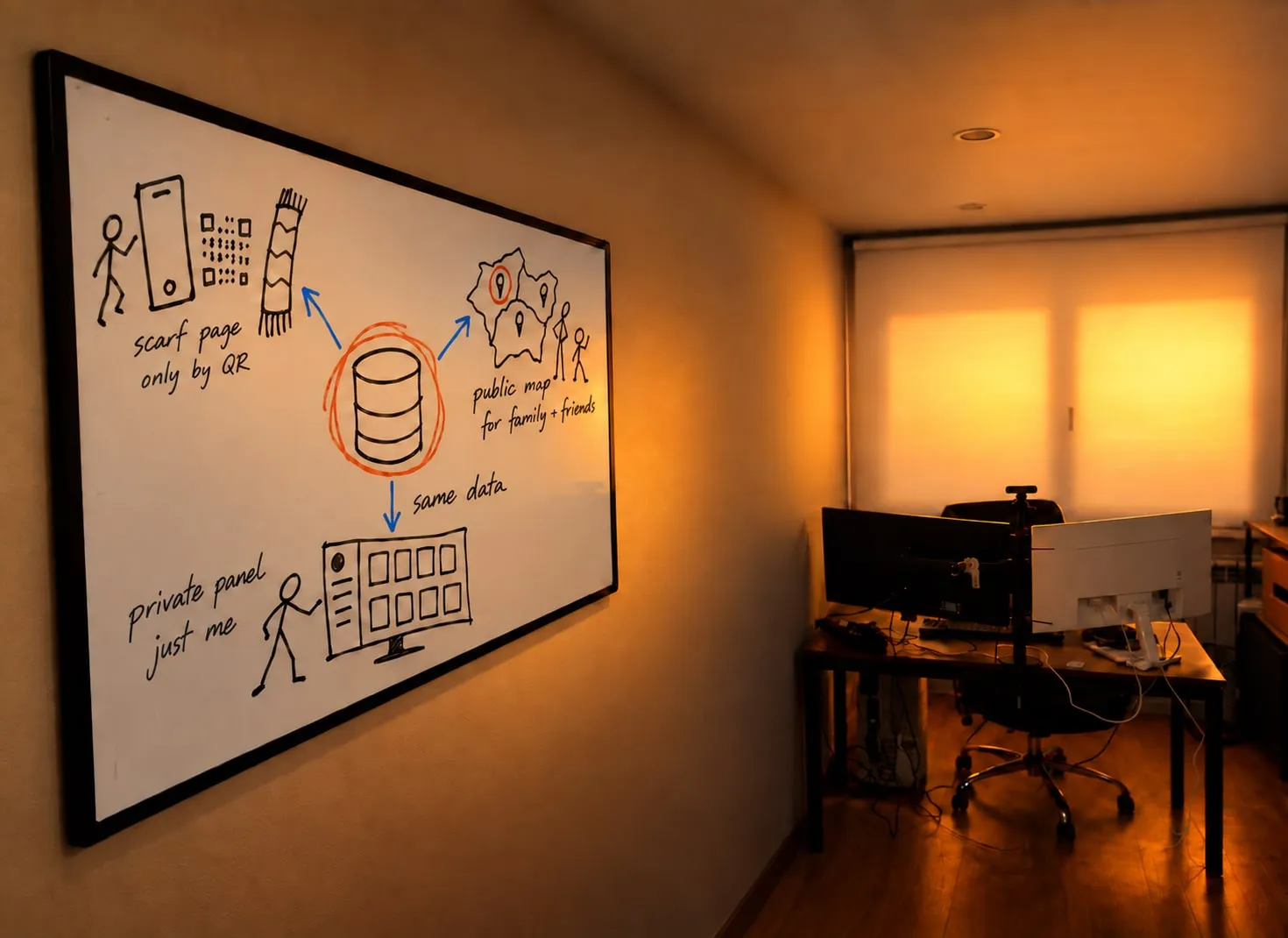
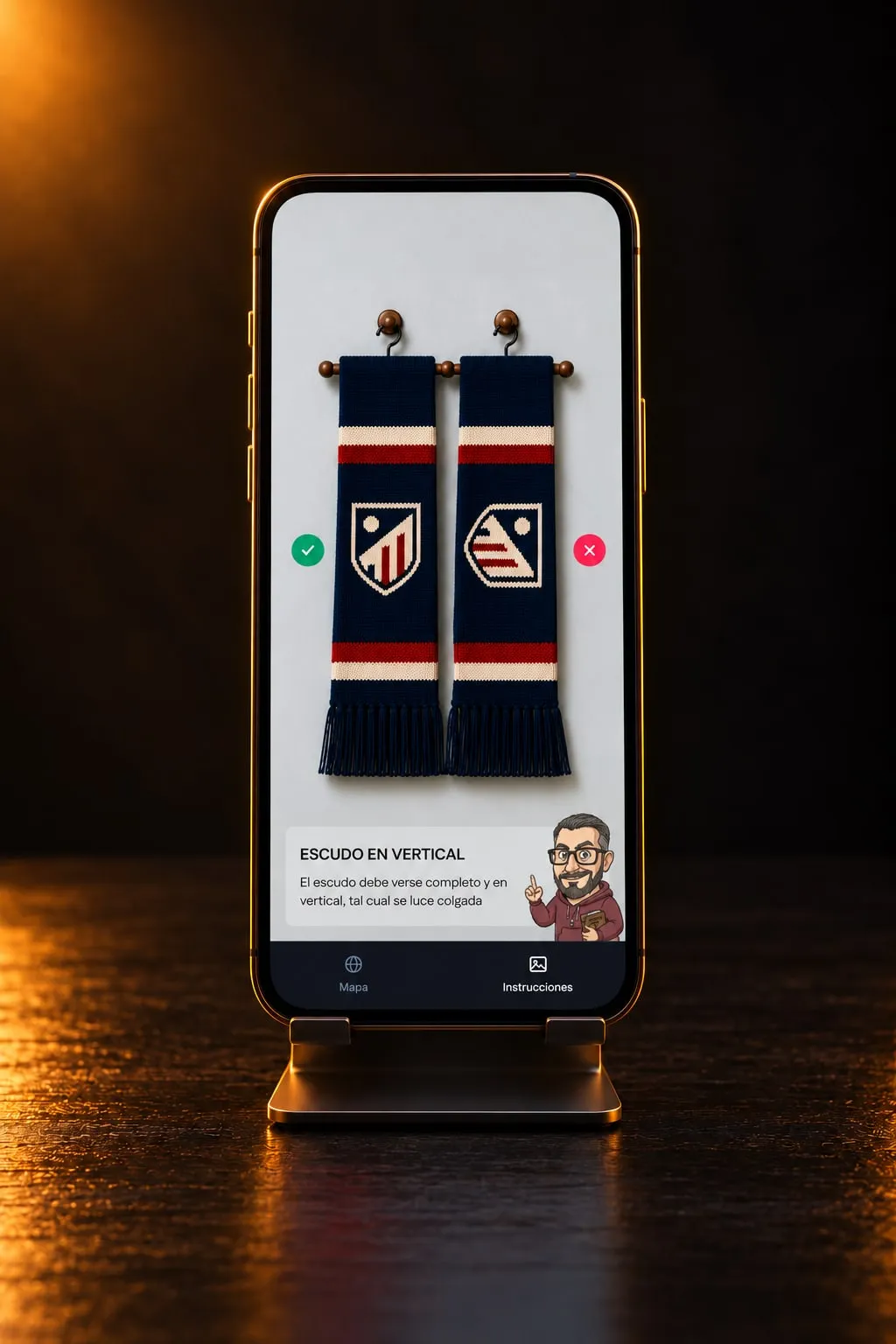
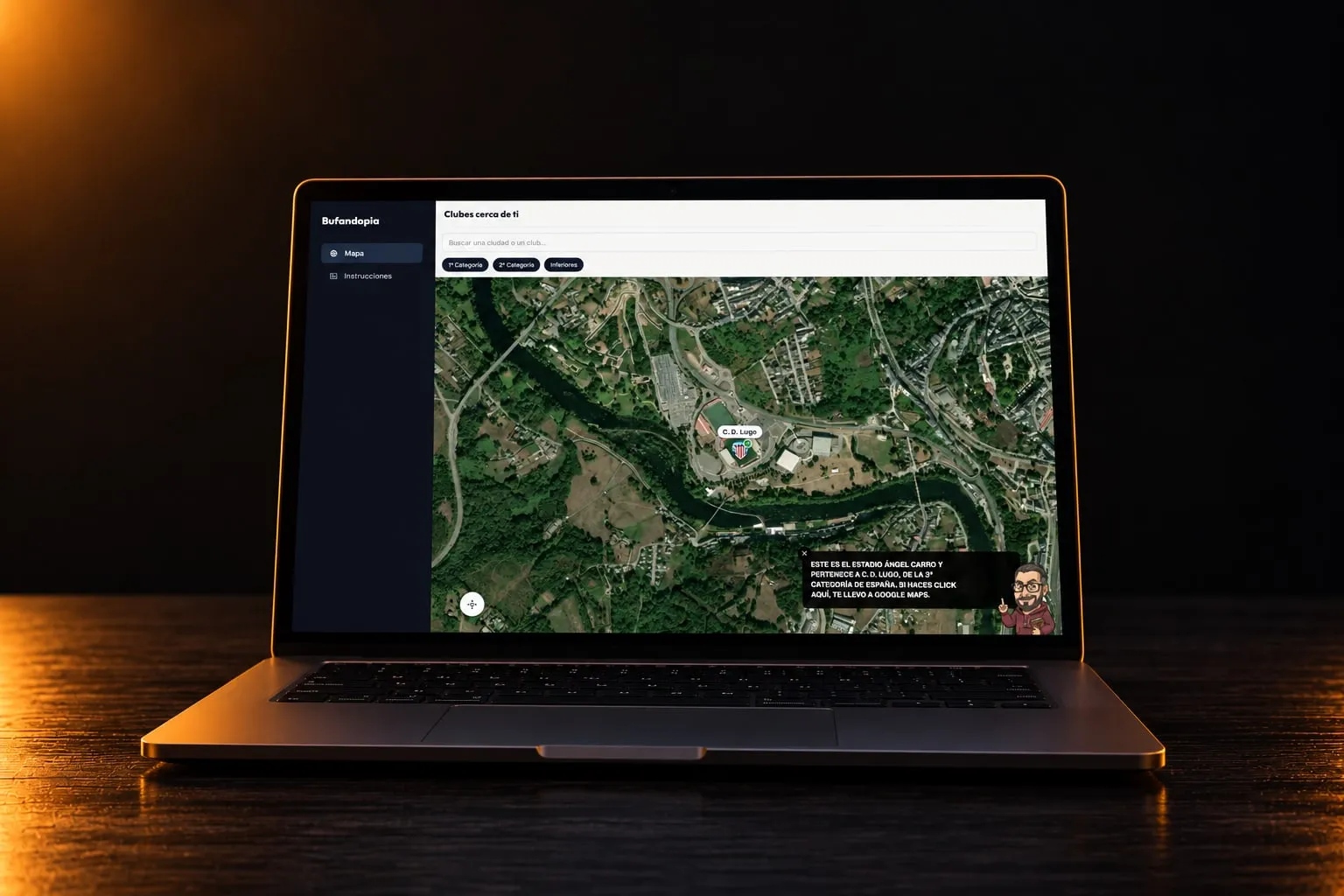
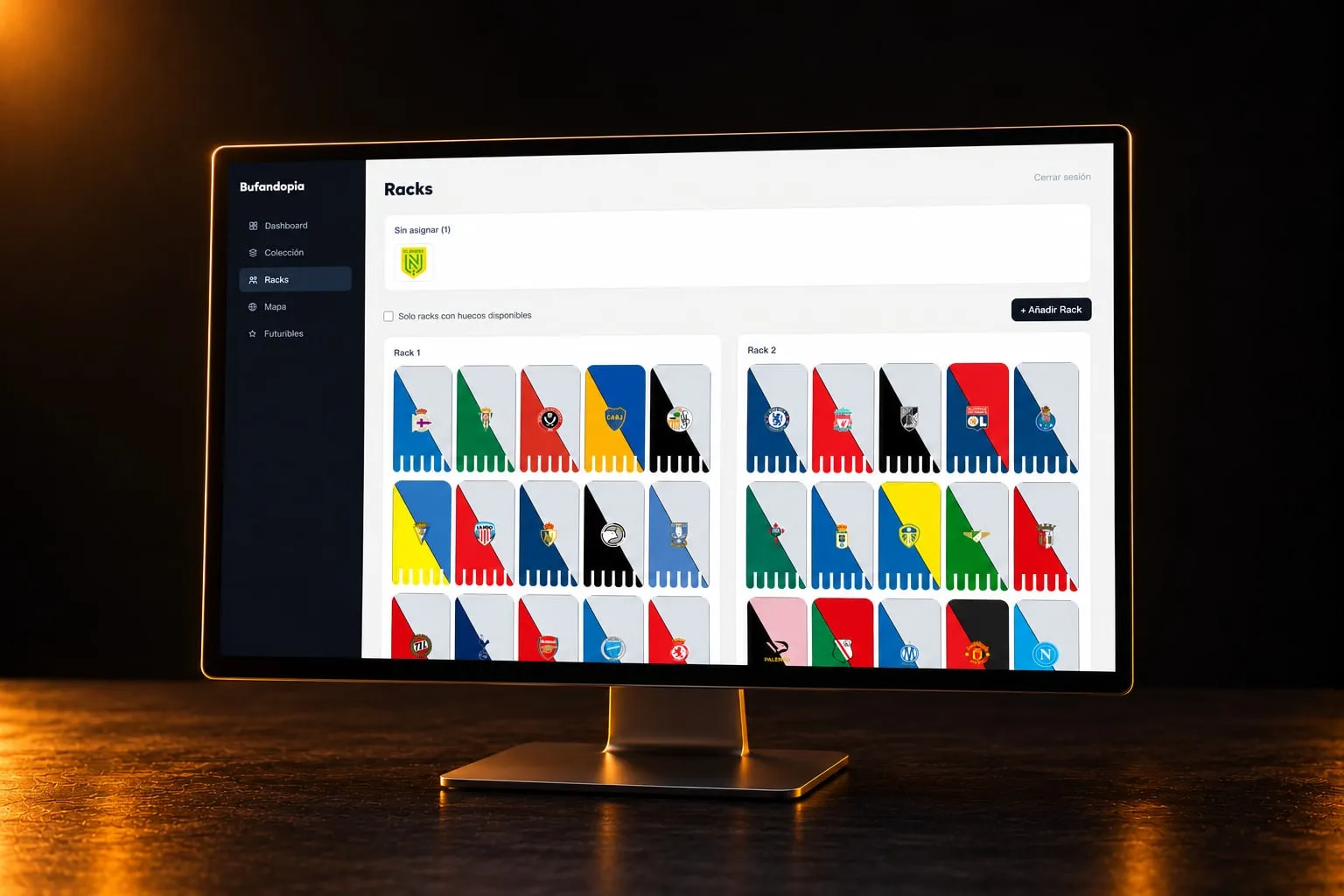
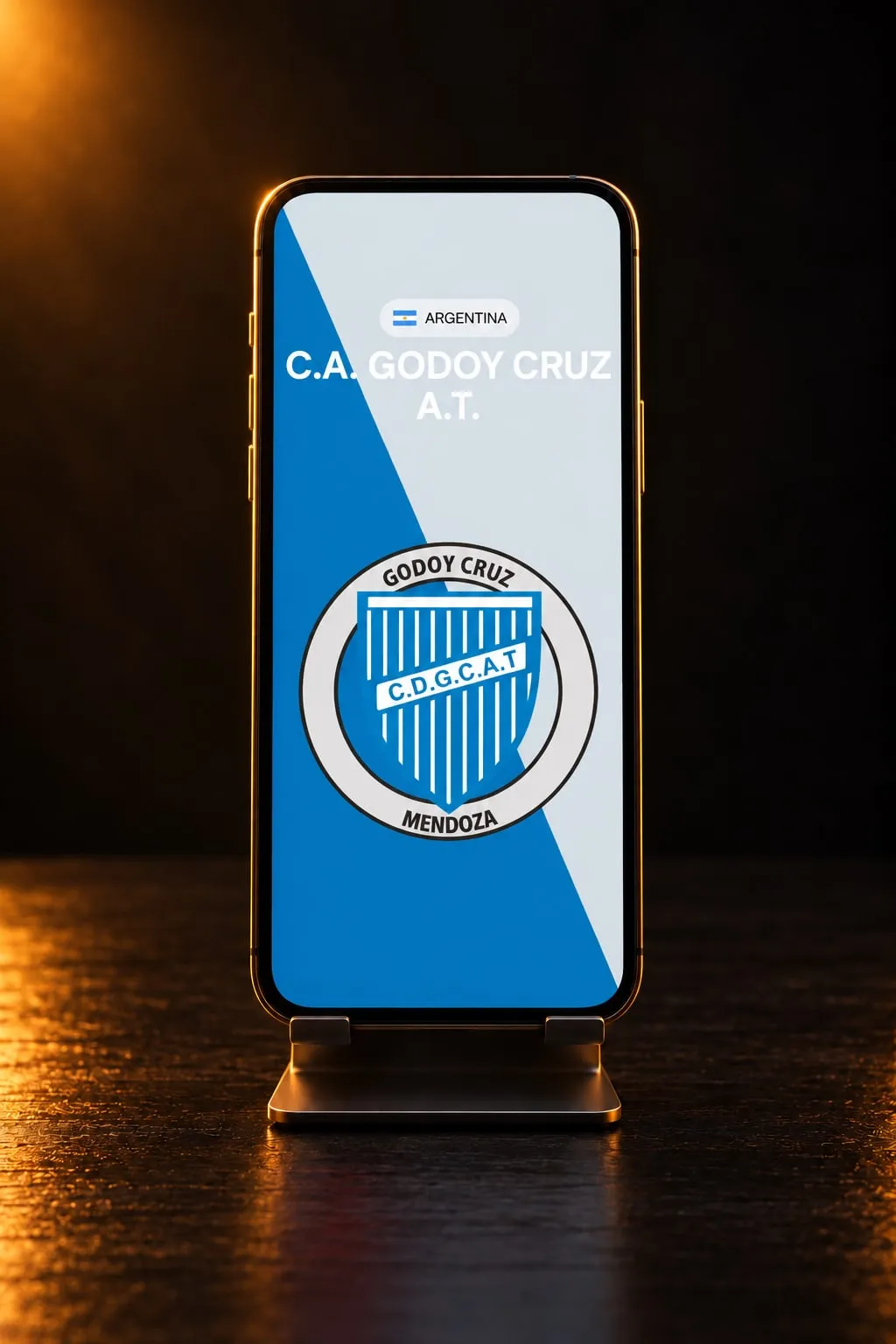
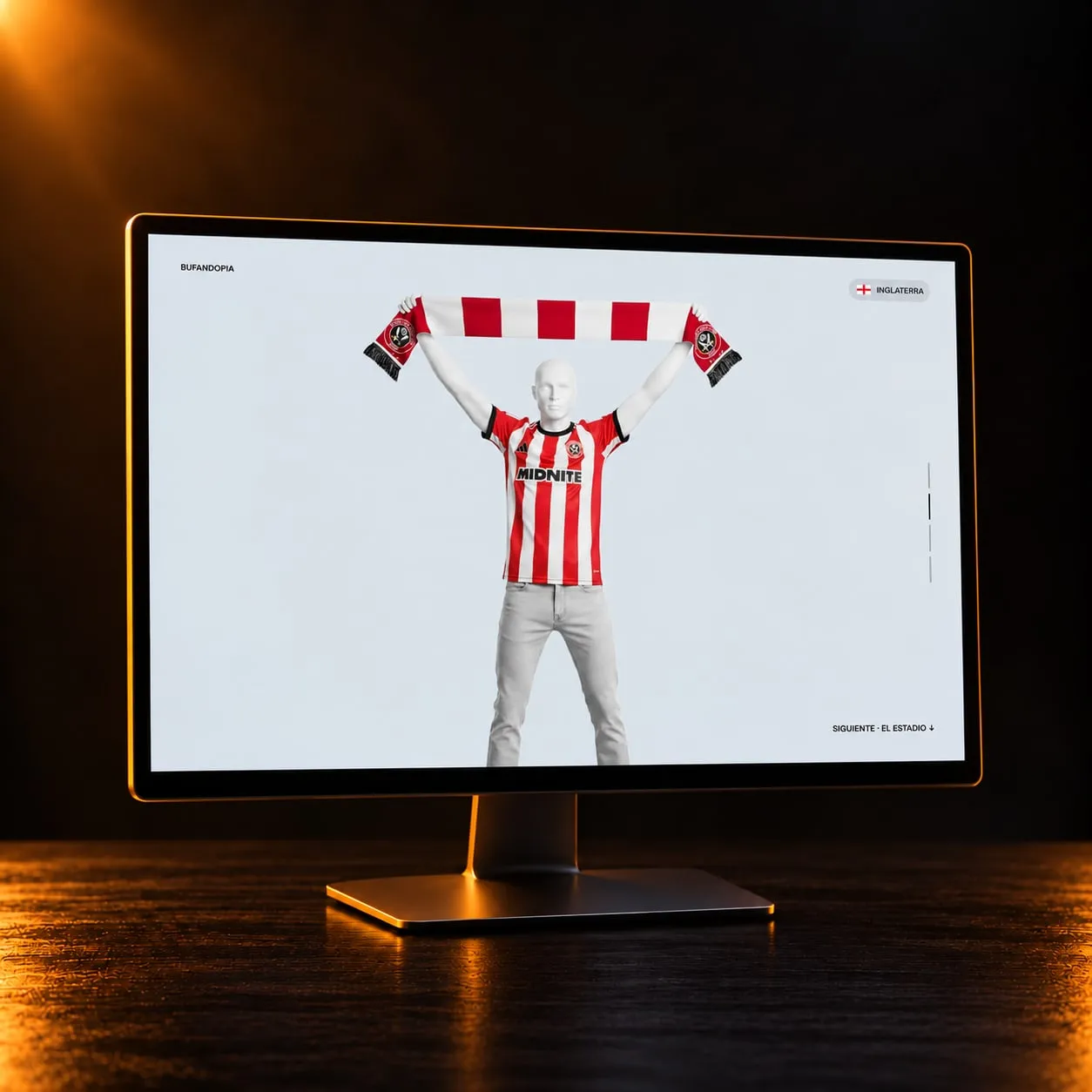
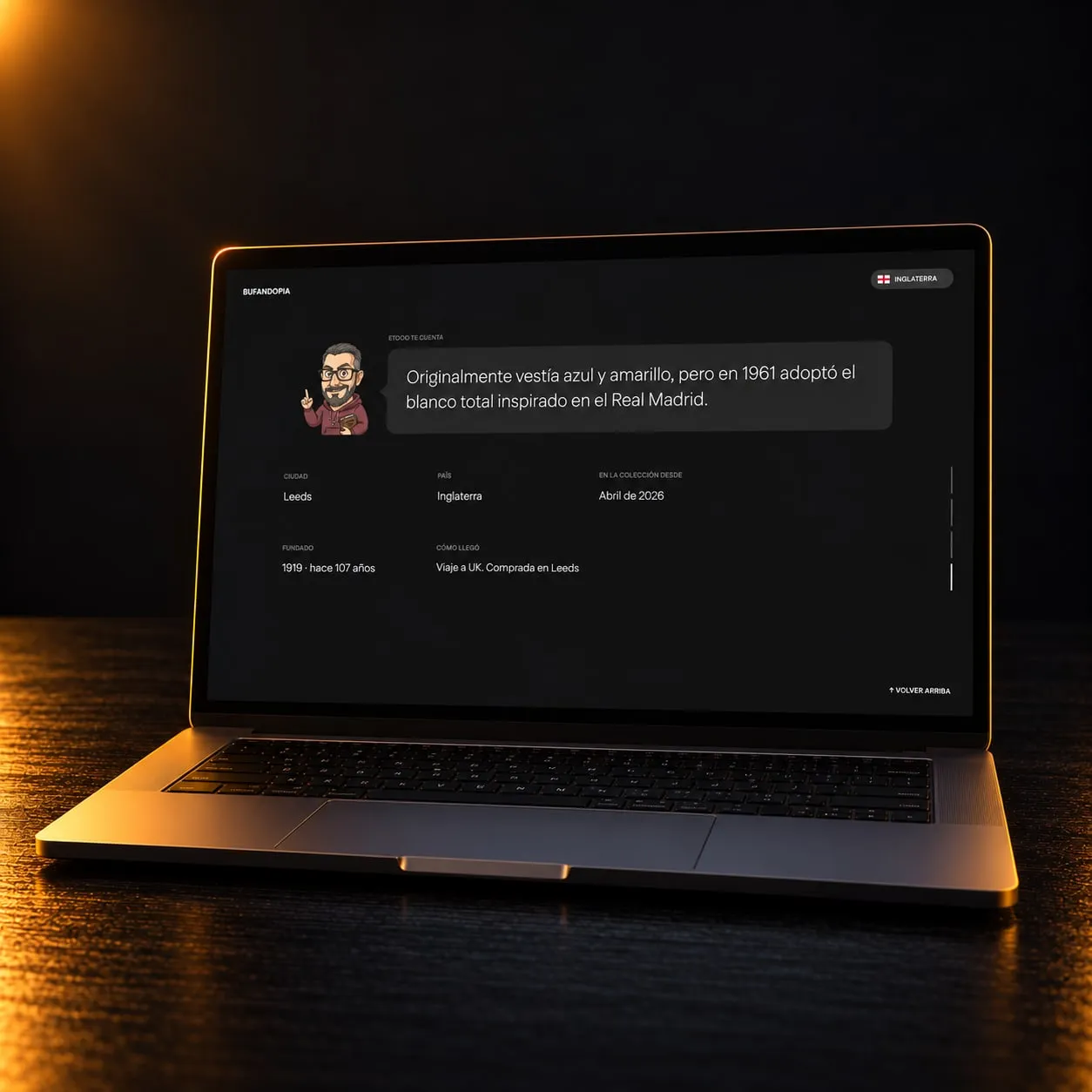
Bufandopia became a product when I stopped designing it only for myself. Today it has three parts: the page of each scarf, reached only through its QR code; a public map of nearby clubs for whoever wants to bring me one; and a private panel where I manage the collection, the wish list and the racks on my wall.
The challenge
With no client, nobody says no. A personal project can grow in any direction, so a large part of the work was deciding what Bufandopia is not: not a shop, not a catalogue and not a tool for several users.
I am also not a developer, and I do not use a terminal. Every line of code was written with an AI coding assistant, and that only works if the product decisions are made first. The assistant can build, suggest an implementation or point out a limit. Someone still has to decide what to build, what to remove and which data can be trusted.
My approach
The work, in order:
- Concept
- Design
- Build
- Check
- Data
- Images
And the decisions that shaped it:
A museum, not a catalogue
My first designs had a price and a league on every scarf. I took both out: the product explains the collection, it does not value it. For the same reason there are no user accounts and no editorial workflow, because the panel has one user. And the address of a scarf page never changes, even if the club’s name does, because that address is printed on a QR code.
A wish-list scarf is a normal scarf, not yet published
Clubs I am allowed to buy from under my own rules, but whose scarf I do not have yet, could have been a separate and simpler kind of record. I made them ordinary scarves with a “not published” mark. When one arrives, publishing it flips the mark and asks how and when it came: nothing to duplicate or migrate. The same logic removed the “position in the rack” field from the form, since the real order is set by dragging scarves in the rack view.
A small database I can trust, not a huge one I cannot
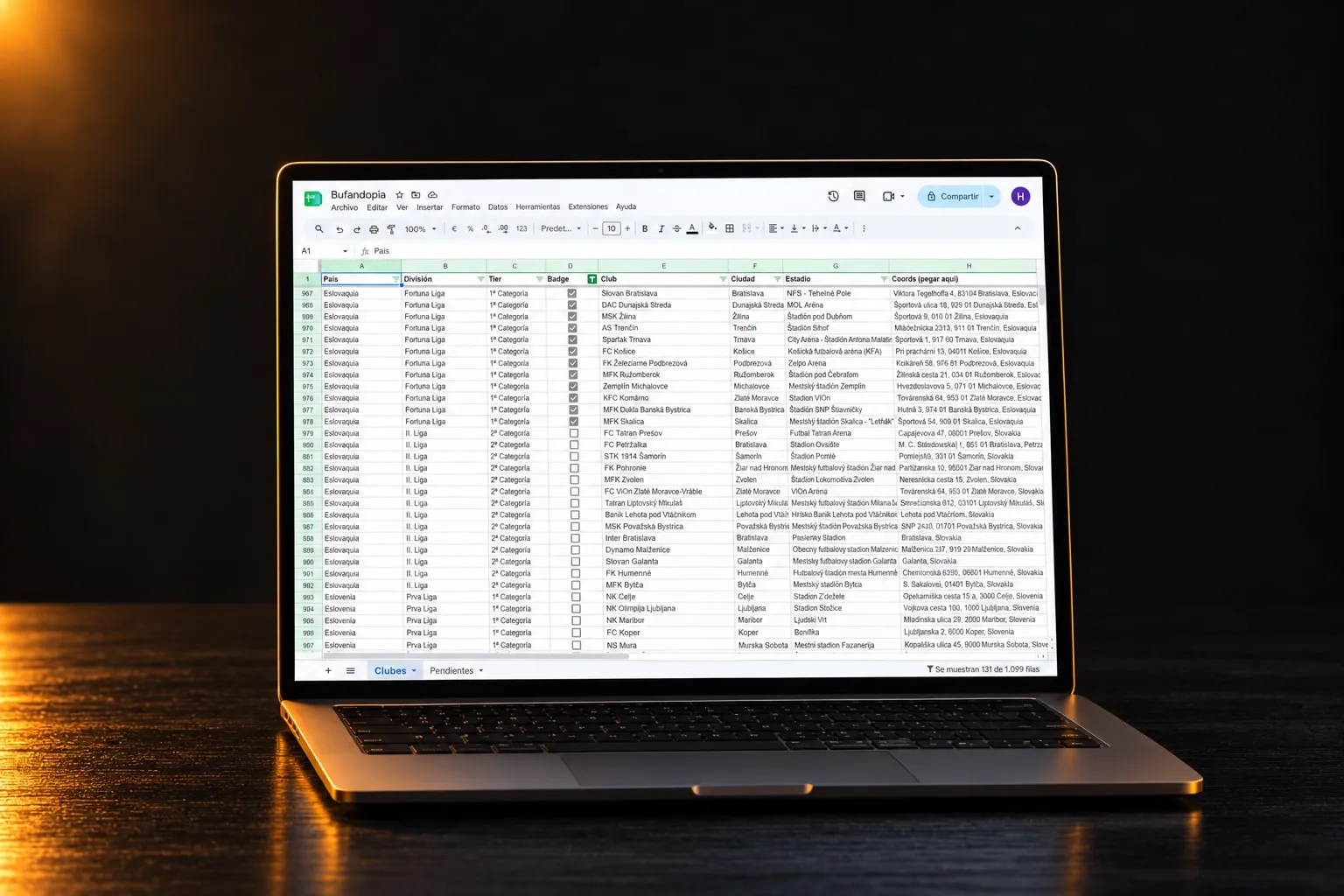
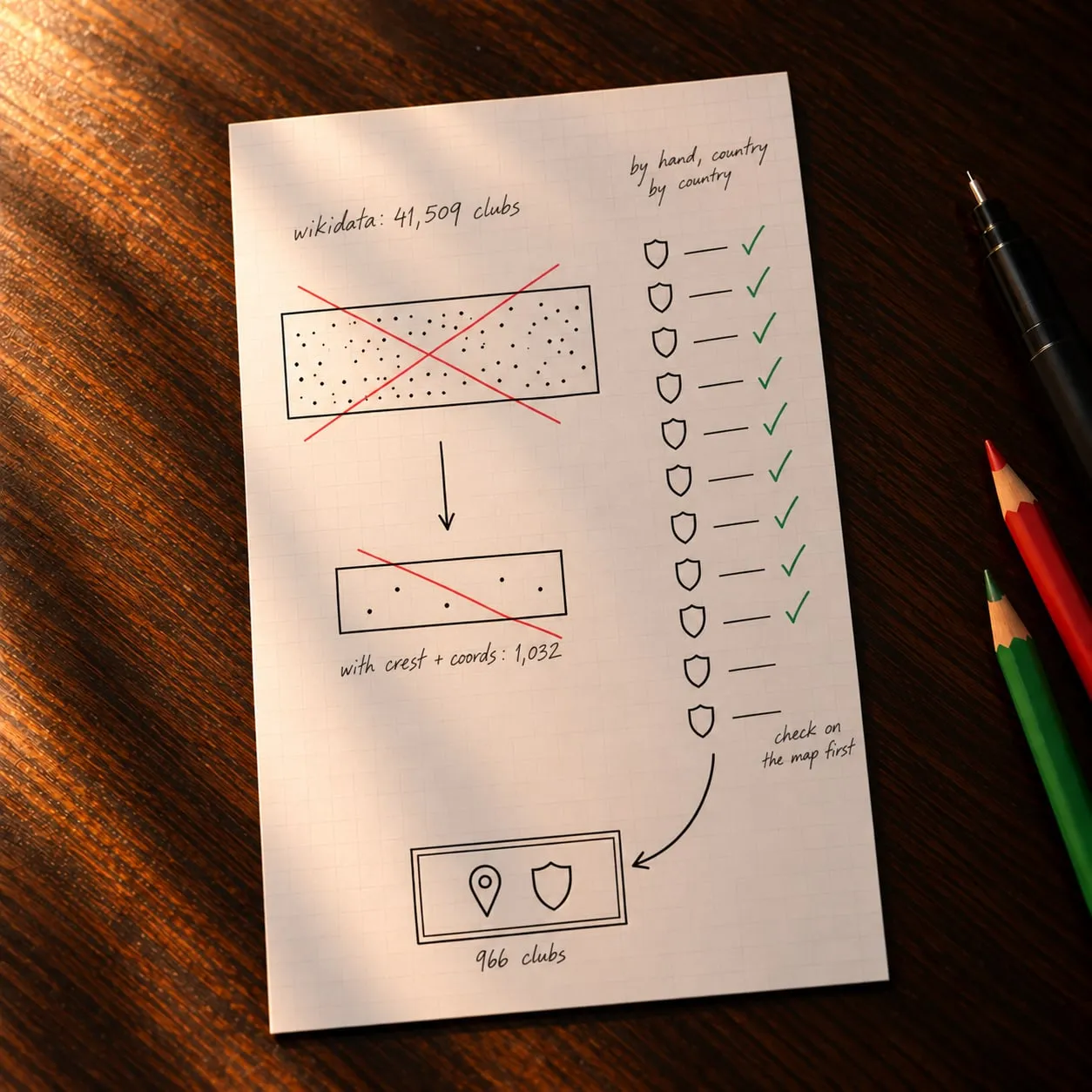
The first club database was an automatic import from Wikidata: 41,509 clubs, of which only around 1,032 (2.5%) had both a crest and coordinates. I dropped it and built the database by hand, country by country: name, city, stadium, coordinates, tier and a vector crest from a collection I have kept for more than ten years. Coordinates do not count until I have checked them one by one, because a review of the first 28 scarf pages found 16 stadiums in the wrong place, by anything from 400 metres to 18 kilometres. Reserve teams and the lowest tiers stayed out.
A map you can wander, with a way out when location fails
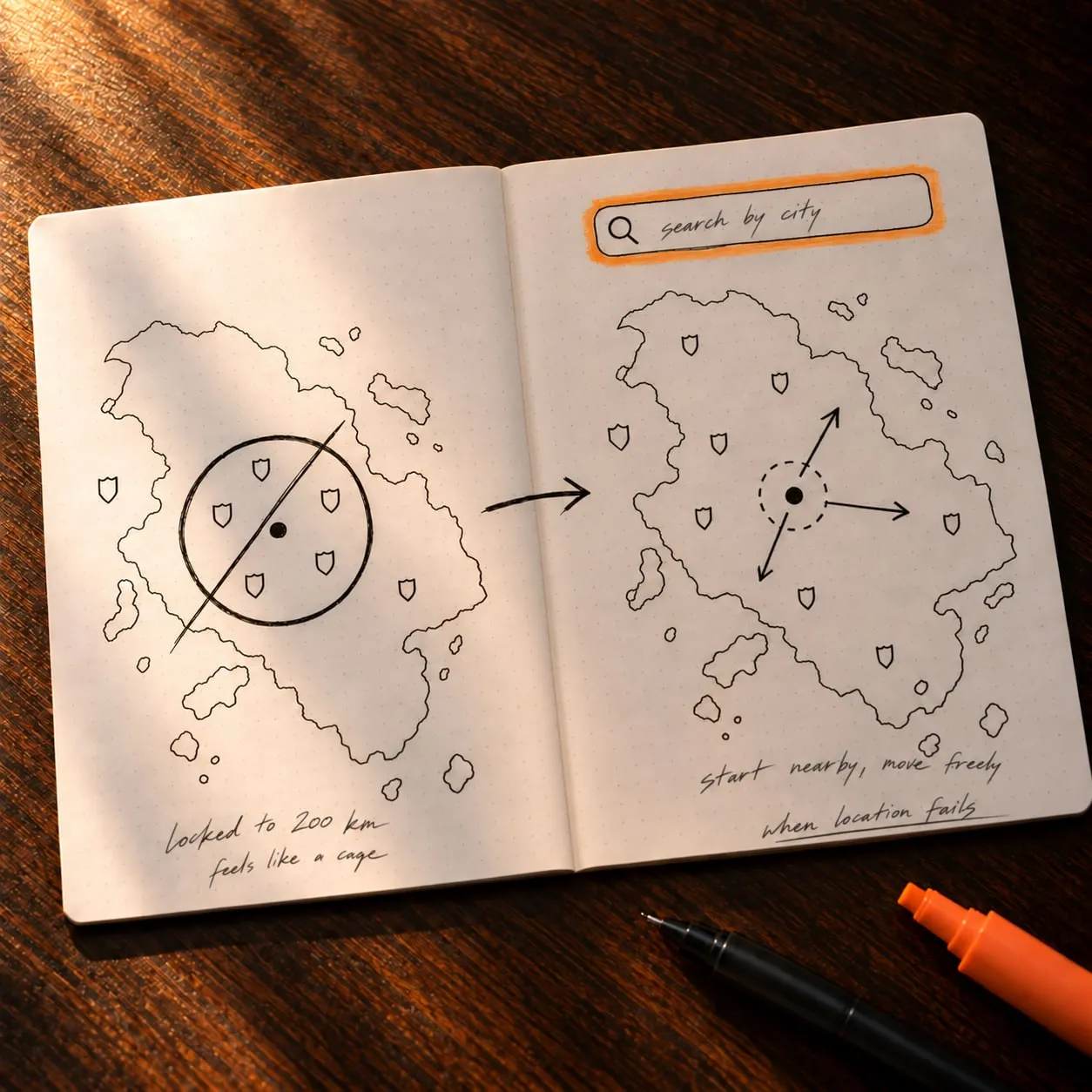
The first concept locked the map to a 200 km radius around the visitor. On screen it felt like a cage, so the final map opens on the nearby area and lets you move freely while new clubs appear. Search by city sits next to geolocation on purpose: a desktop browser once placed me more than 100 km from where I was, and the clubs looked wrong when the only thing wrong was the blue dot. I also tried grouping crests of nearby stadiums, at three different tolerances, and removed it: it worked, and it was no better than letting them overlap.
The results
- 31 scarves published, from 8 countries
- A public map with 966 clubs from 22 countries
- A working base the day after the first commit
- A private panel in daily use
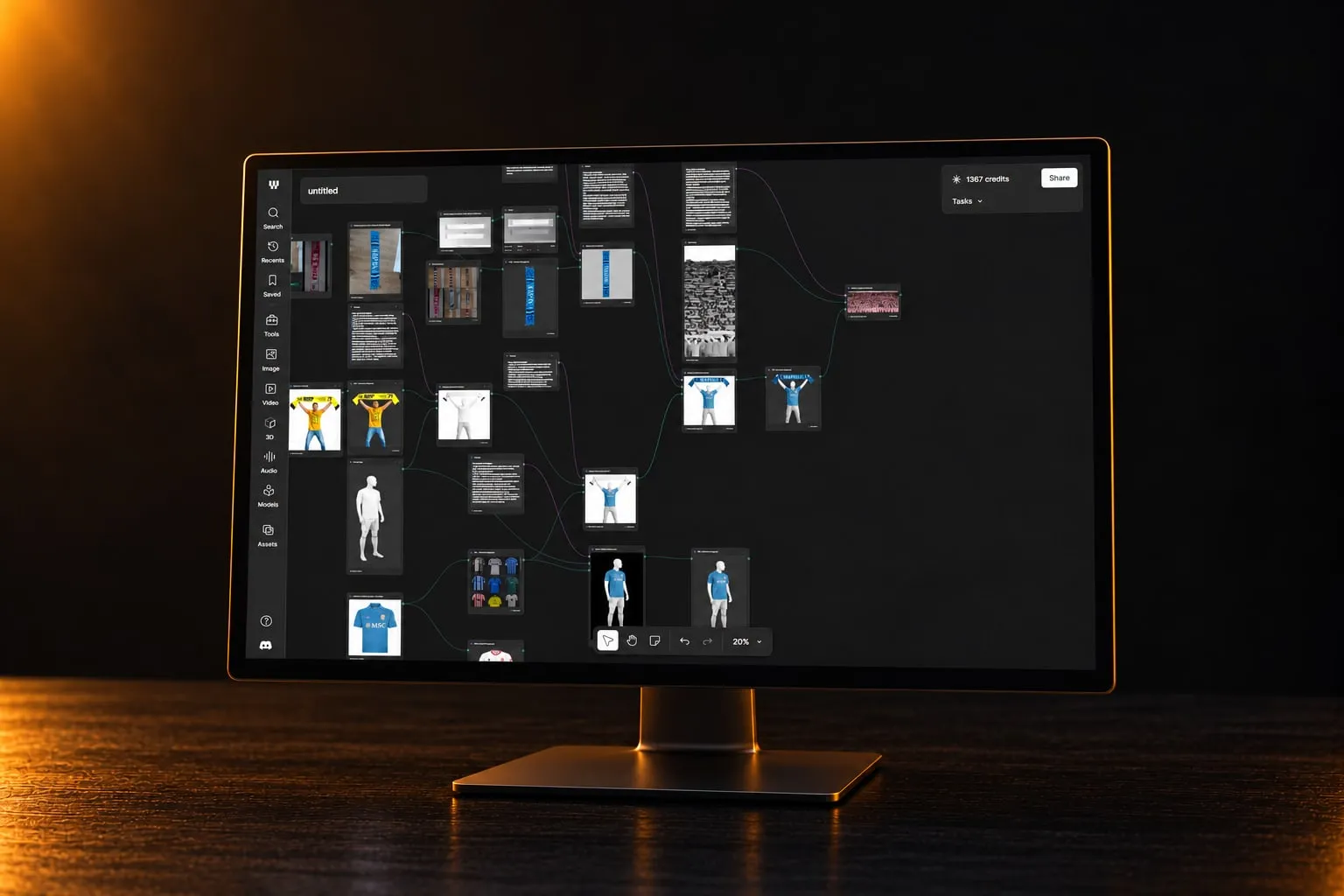
- A repeatable image pipeline
- Around 5,900 lines of code in production, written with an AI assistant
What I learned
AI let me take my own decisions much further: not to a prototype but to a product that runs. Where it did not help was in the decisions themselves. Noticing that my parents needed a map and not a database, choosing 966 checked clubs over tens of thousands of incomplete ones, removing a field or refusing an interaction that worked but was not useful: that was still product design, and it was still mine.
With image models I learned to change one condition at a time: rewriting a prompt that almost works breaks what already did. And when the scene of the stand kept inventing colours, the fix was not in the prompt but in a model with more resolution.
I made Bufandopia on a whim. It is not a professional project. I use it every time a scarf arrives. And there are three I would love to see arrive, if anyone reading this can make it happen: Sheffield F.C., the oldest football club in the world; Esporte Clube Macapá, in Brazil, whose stadium has one half of the pitch in the northern hemisphere and the other in the southern; and Deportes Puerto Montt, in Chile, the southernmost professional club in the world.

Contact me
If you’ve taken a liking to me and want to get in touch, tell me about the project, the talk or your theories about Area 51. Write to me, or book a call.