

All work
Designing for the people who run wind farms
Fourteen months as the only designer of a platform that runs wind and solar farms in real time.
- Product Designer
- Product design · Energy
- 2020 - 2021
- Two frontend developers, an engineer and the control room operators
- Fourteen months
- Product design, design system and roadmap
In short
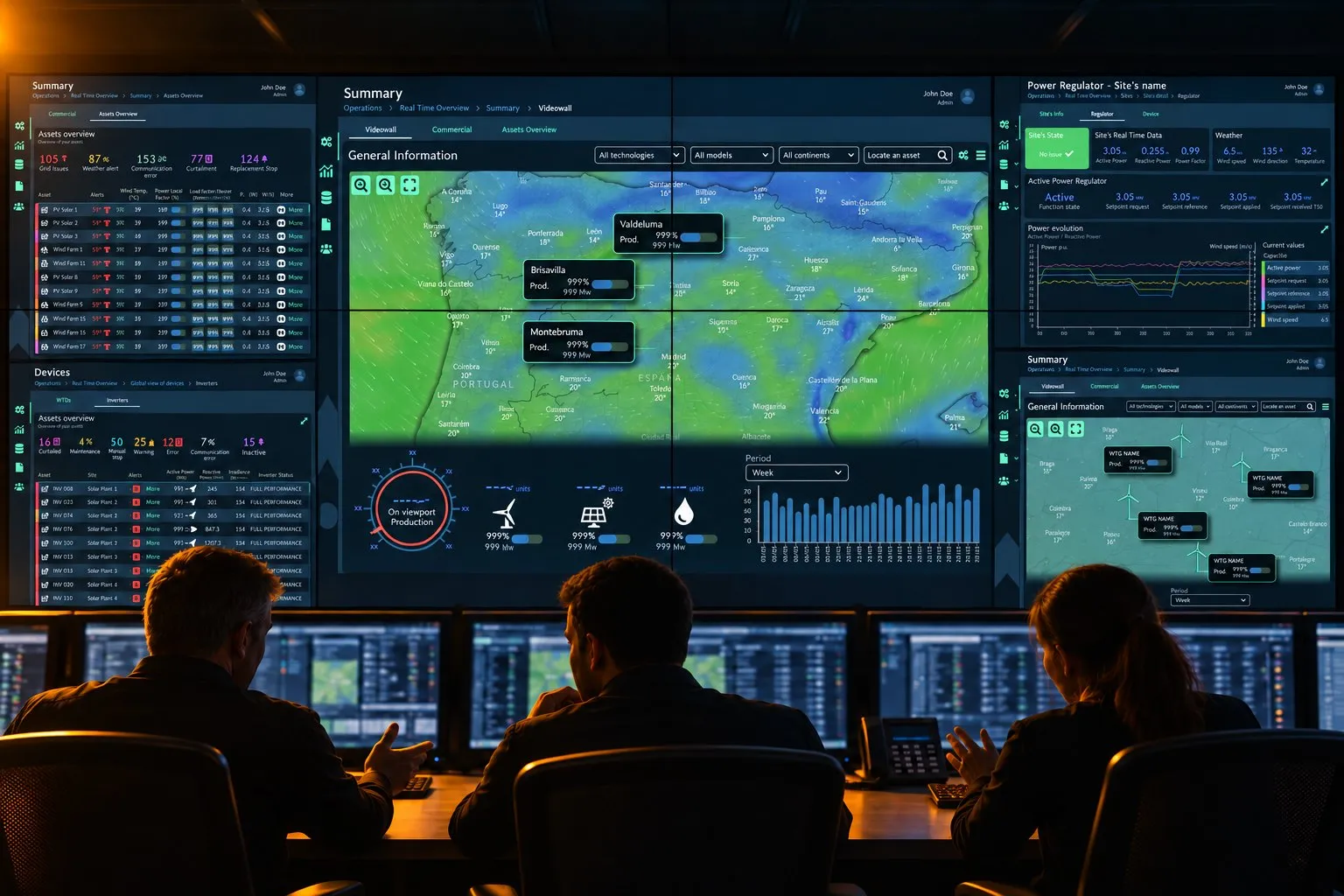
For fourteen months I was the only designer of a platform that runs wind and solar farms from control rooms. I learned an industrial domain from scratch, redrew the diagrams operators use to supervise 13 substations, built the company’s first design system and planned a year of design work.
- 1.5K+
- 33
- 13
- 31
- 183
- 26
The context
A software company whose platform lets control centres monitor wind and solar farms and operate their equipment in real time: turbines, inverters and substations. Automating those operations was the heart of the product.
I joined in March 2020, at the start of the pandemic, and worked there until May 2021. The move to remote work was not planned, so my onboarding was access to a test environment, and the developers were the ones who helped me understand what I was looking at.
The work ran on three fronts at once: improving the product that already existed, designing tools for individual clients and designing its successor.
The challenge
I did not know the domain. Before proposing a single change I had to understand what each figure represented, what every section was for and how people in a control room actually used it. The interface had been built by developers on frameworks that left little room to customise it.
The company had never had a designer, so part of the job was finding out where design fitted. And each client came with needs of its own, while the product needed a common base that would serve them all.
My approach
The work, in order:
- Audit
- Domain
- Client tools
- Design system
- Substation diagrams
- Roadmap
And the decisions that shaped it:
In the diagrams, the symbols stay and the presentation changes
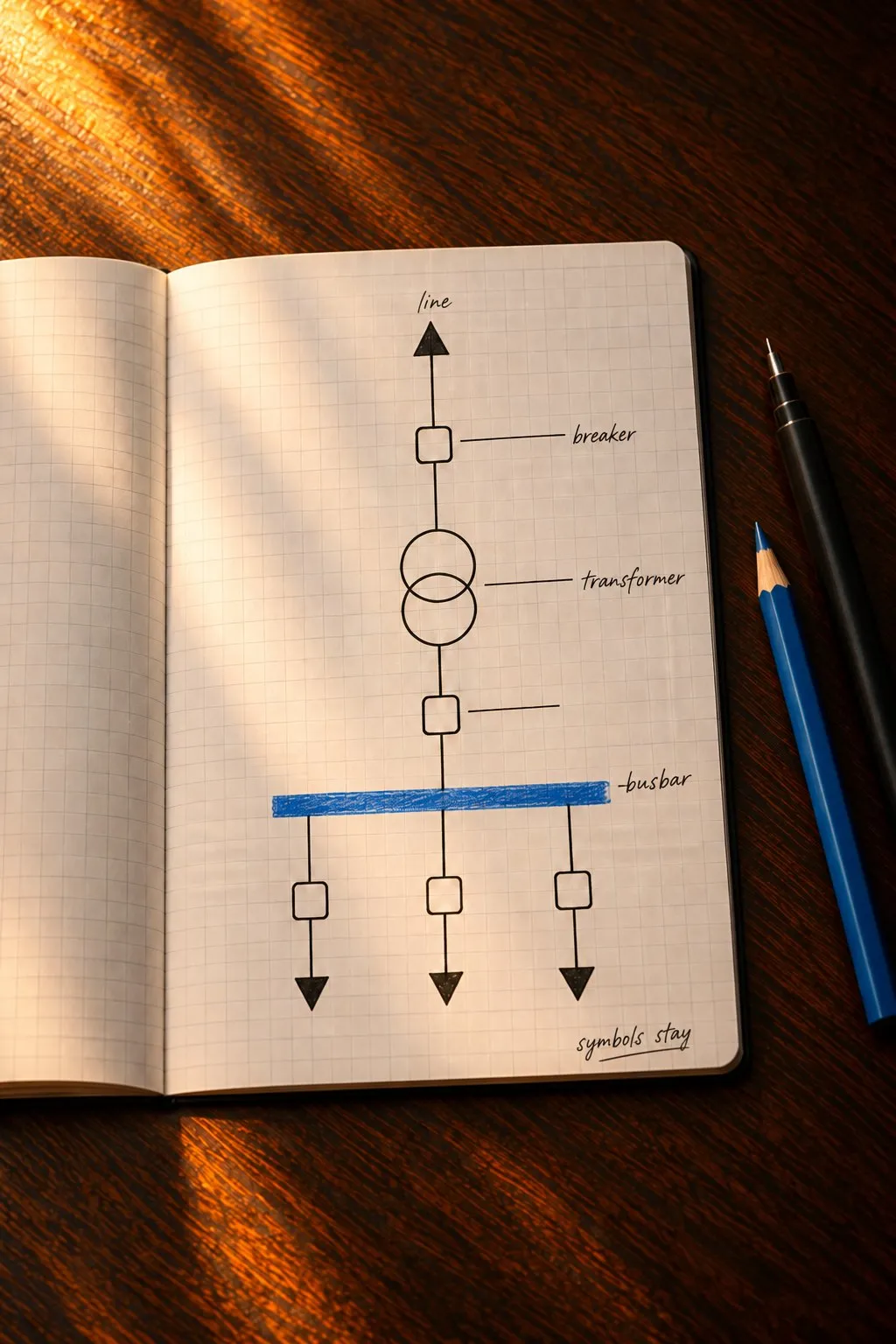
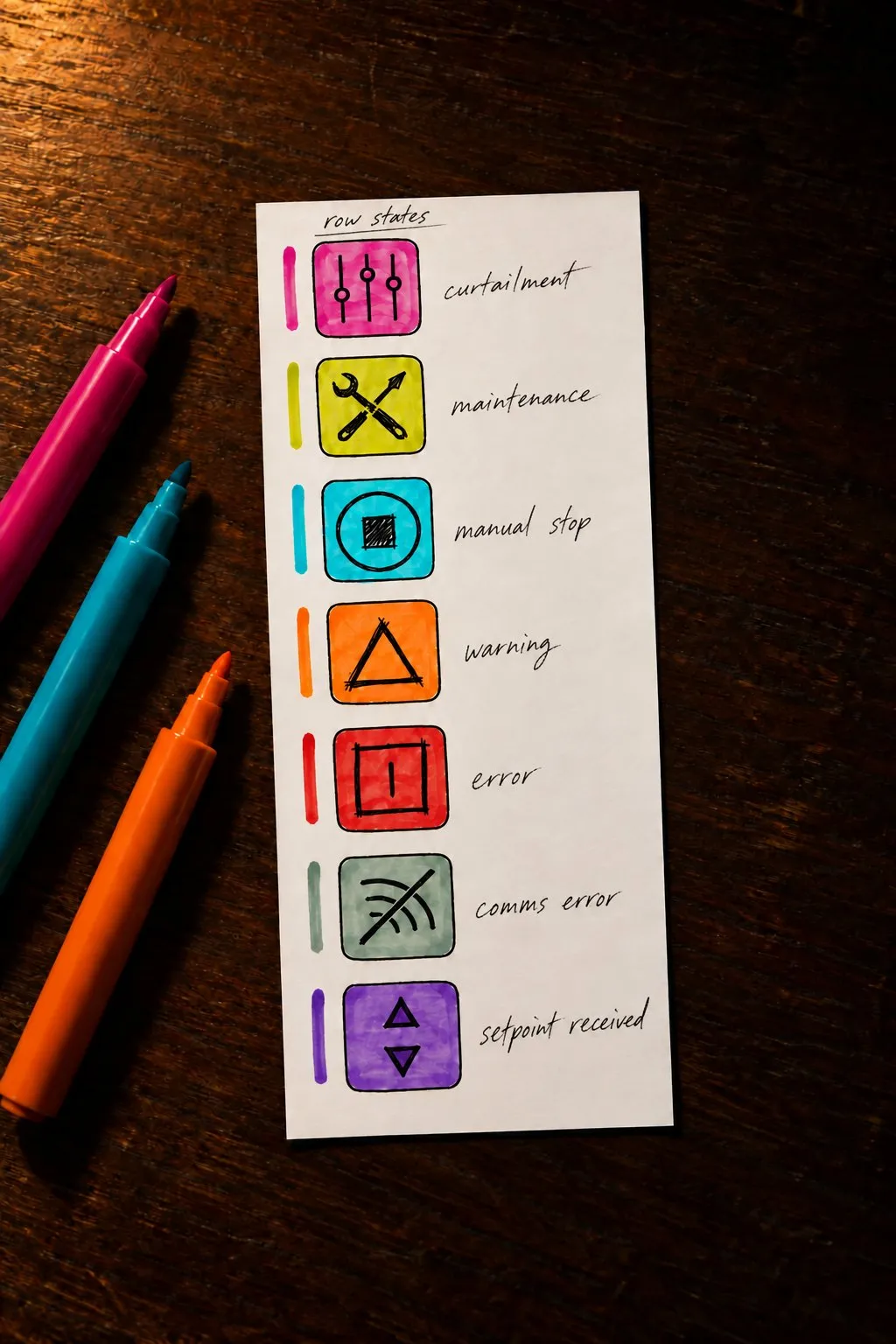
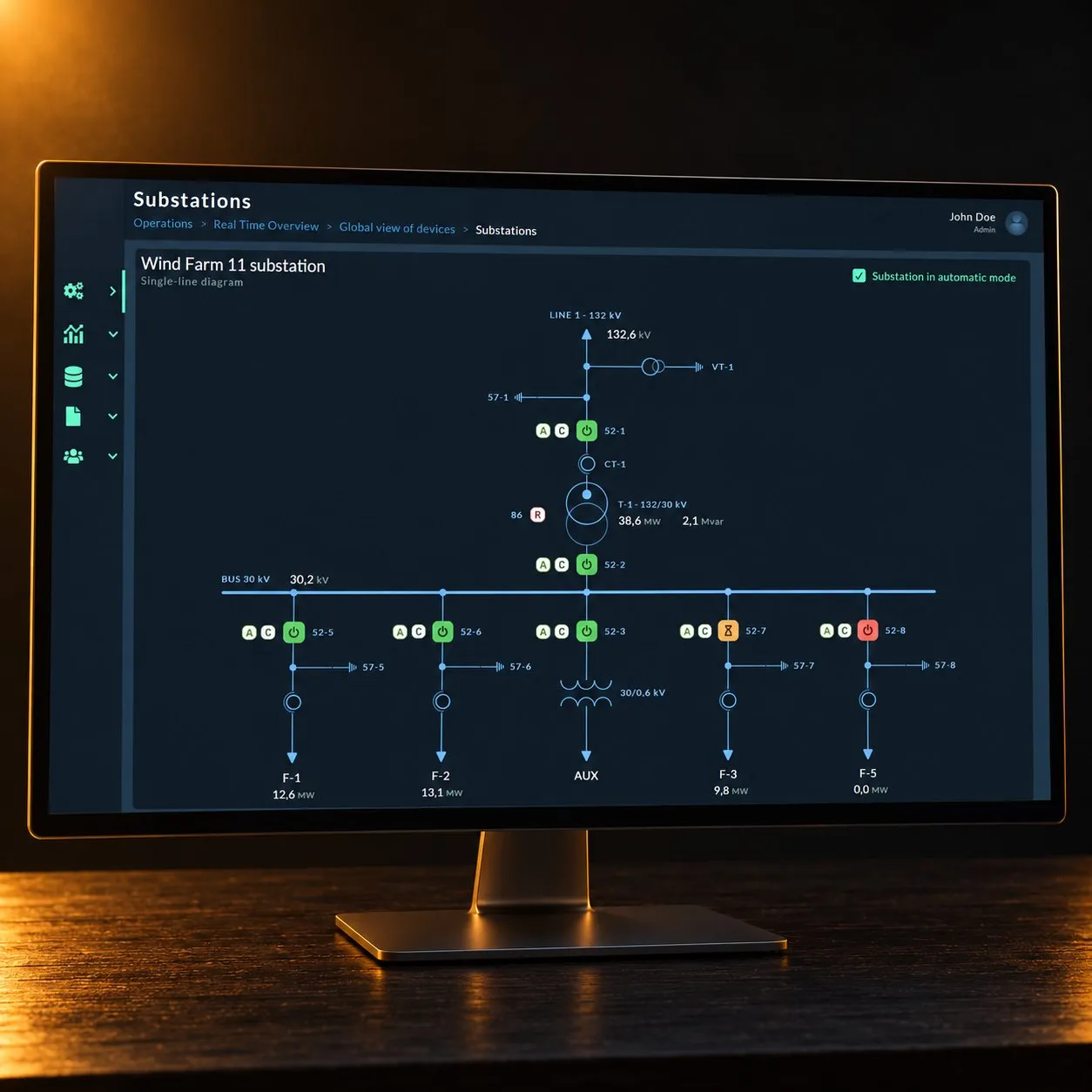
A substation is supervised on a single-line diagram: an electrical drawing with a symbol for every transformer, line and switch. Making it look modern by redrawing those symbols would have changed what operators read at a glance. I worked with an engineer to keep the meaning of each one and adapted only how they sit on a screen: one library of symbols with their states, open or closed, selected or not, and a text style of its own. Operators in the company reviewed the result.
A design system built around the table
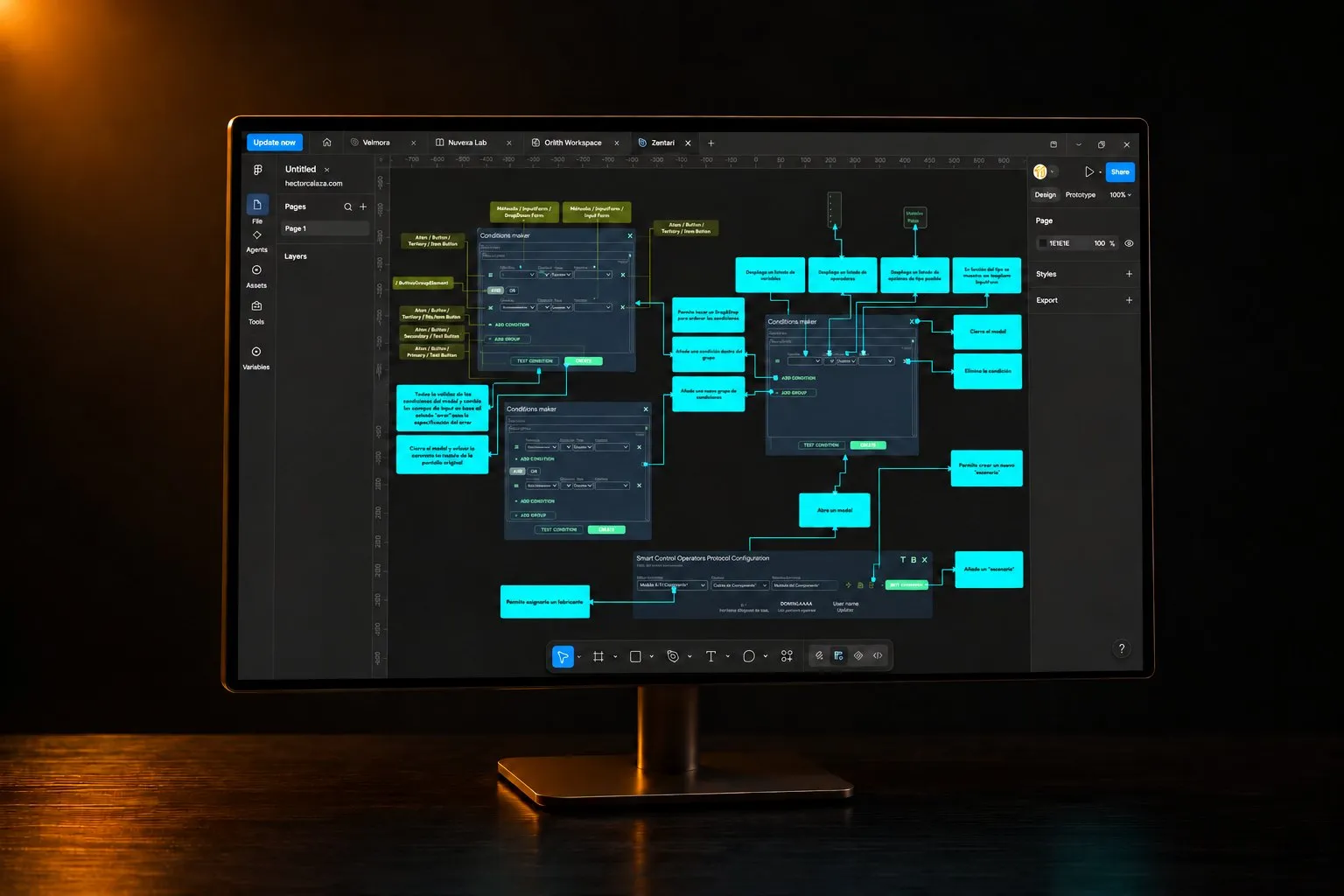
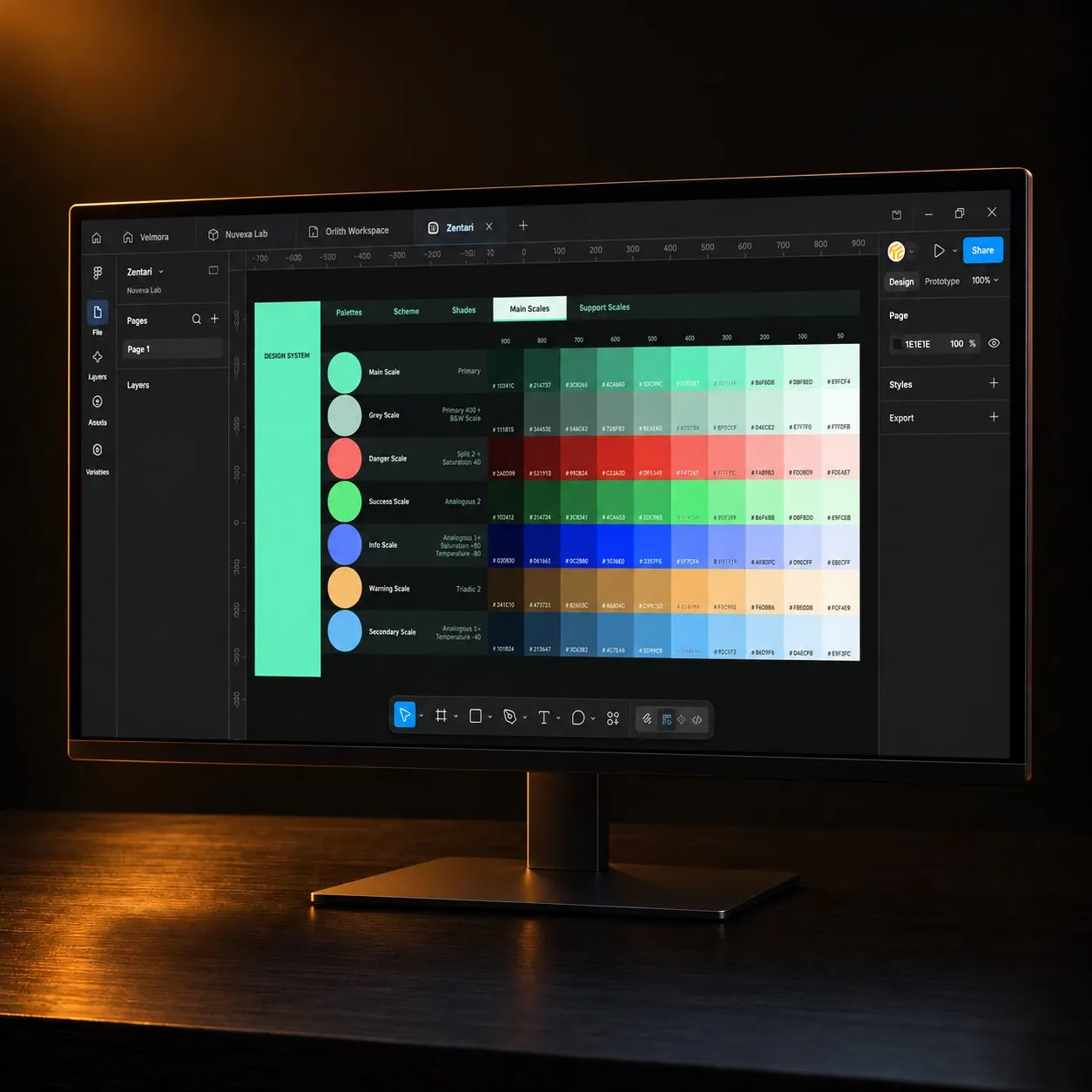
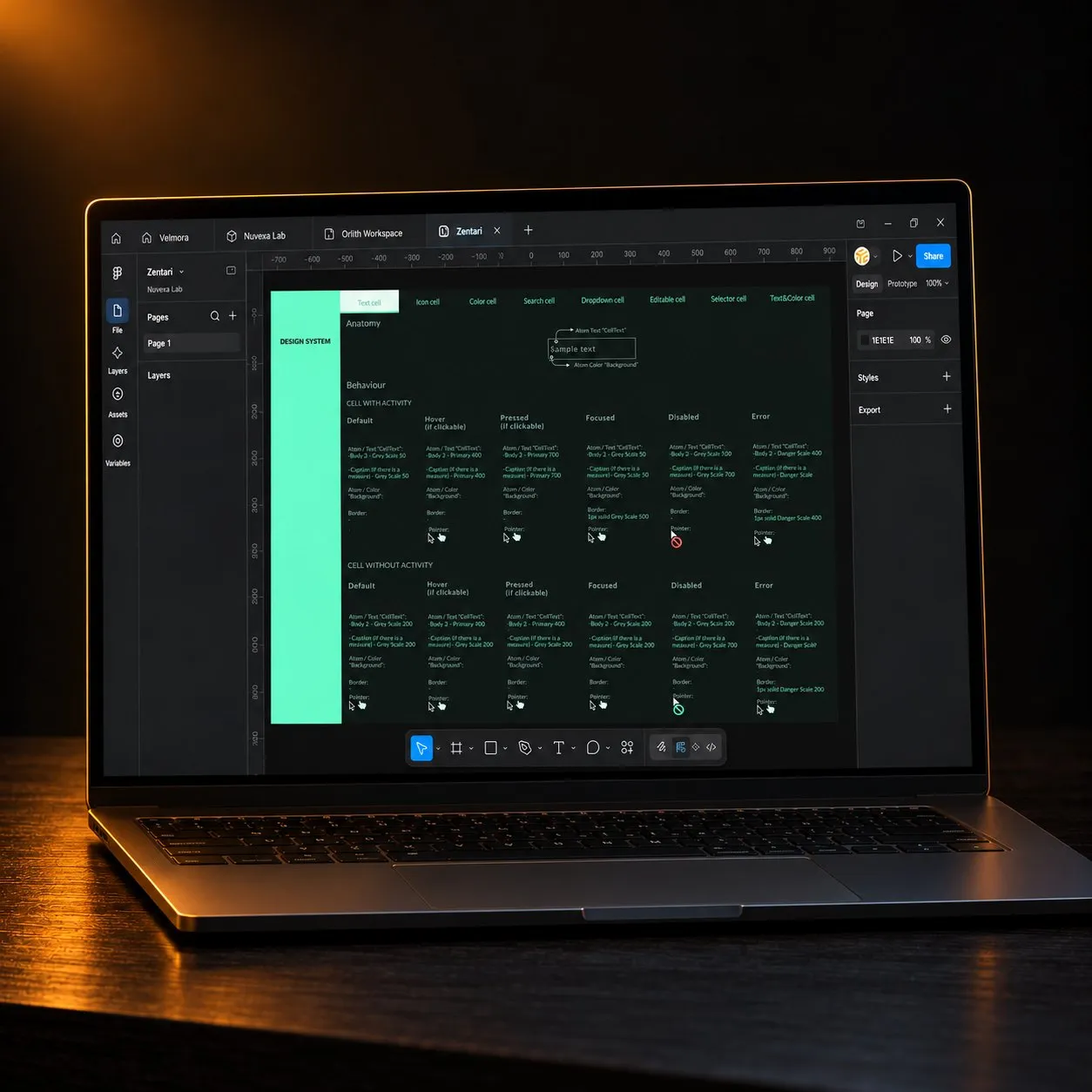
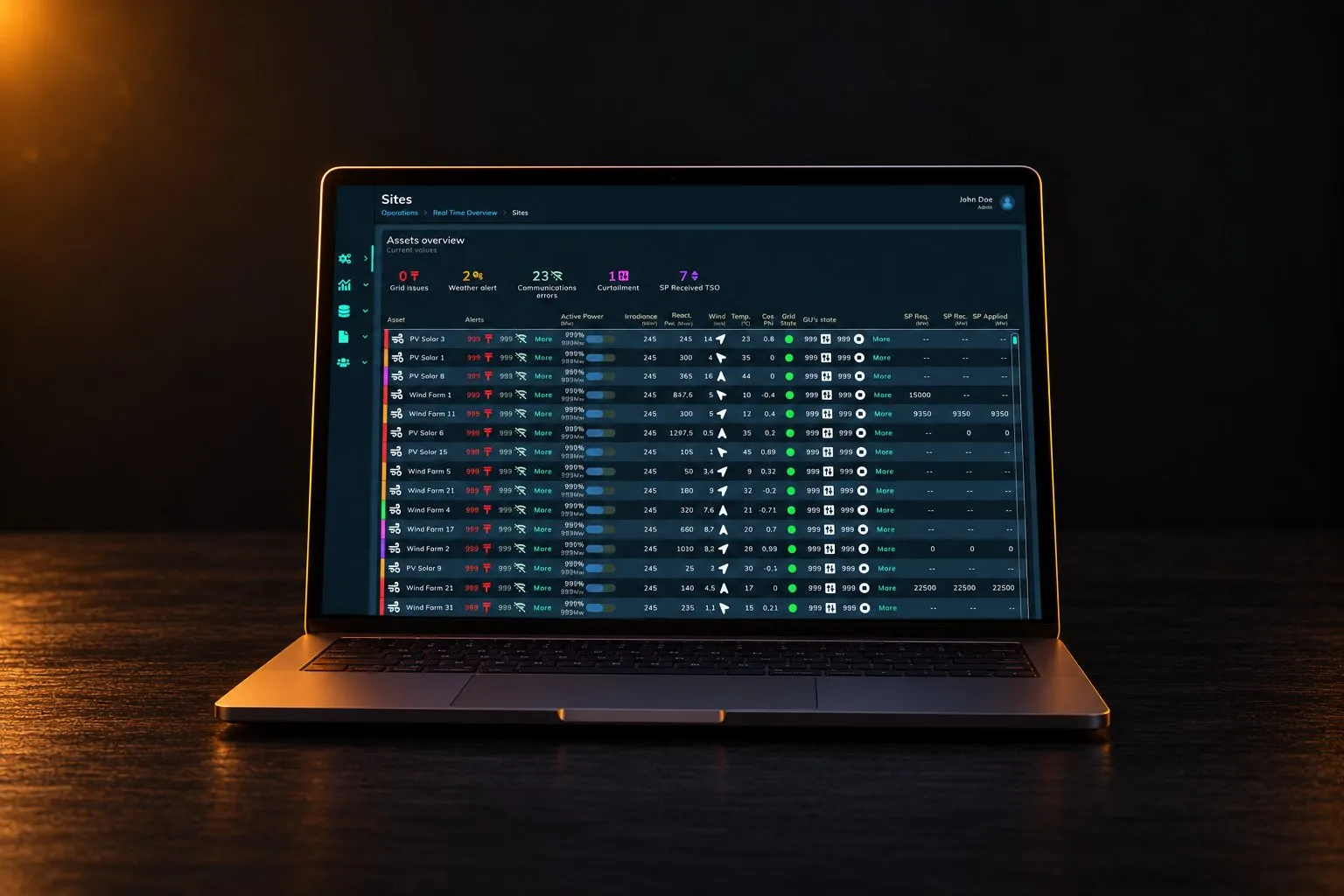
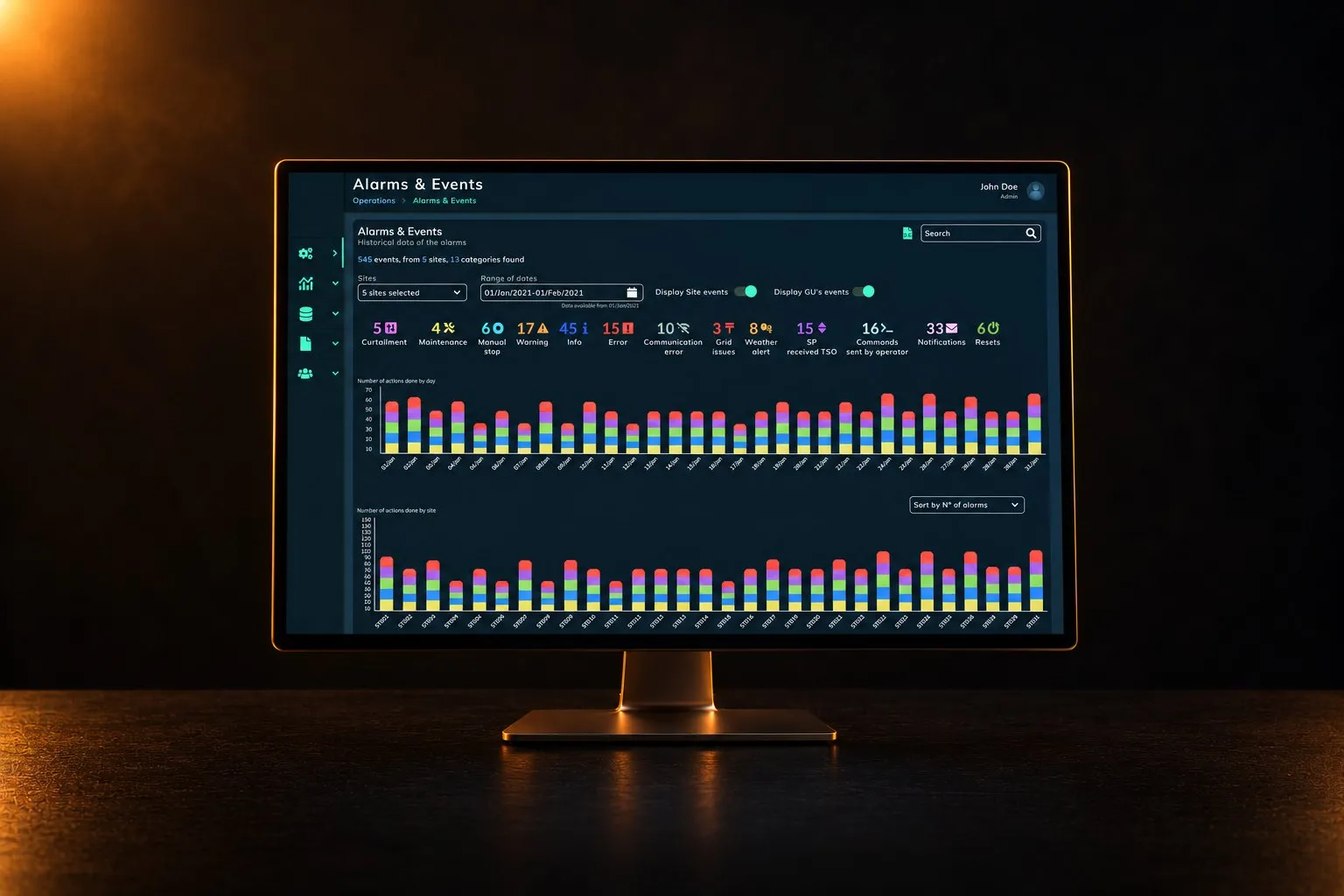
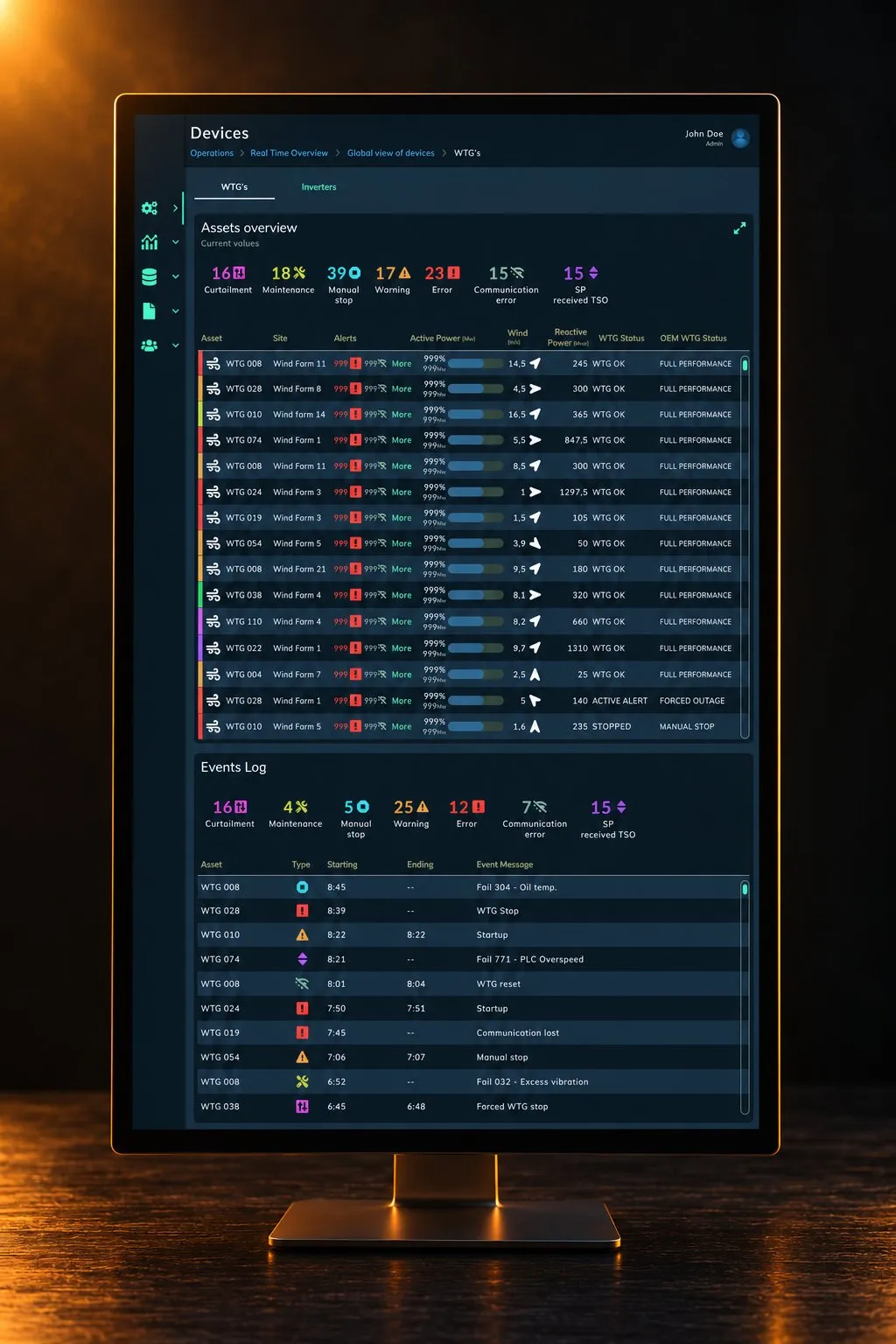
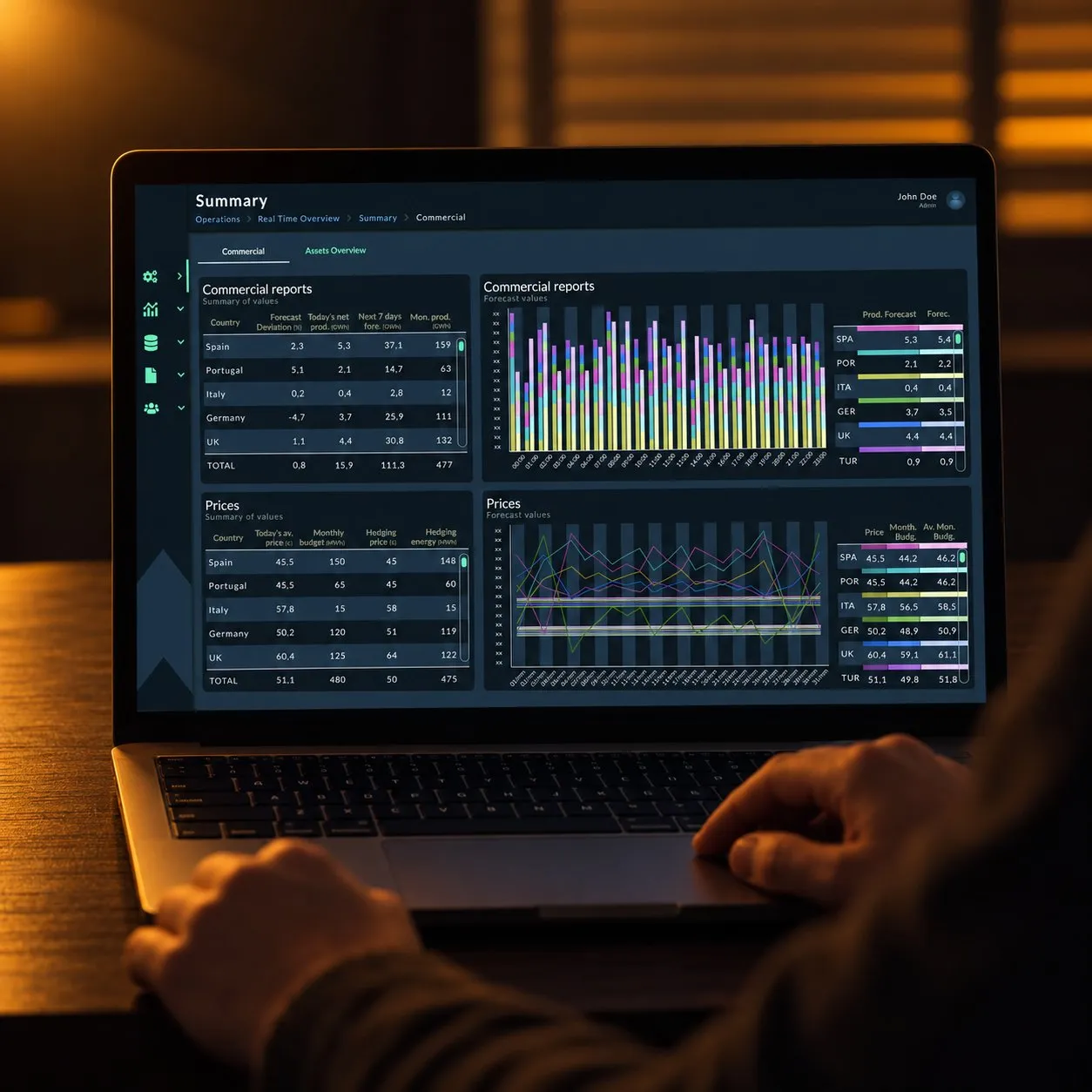
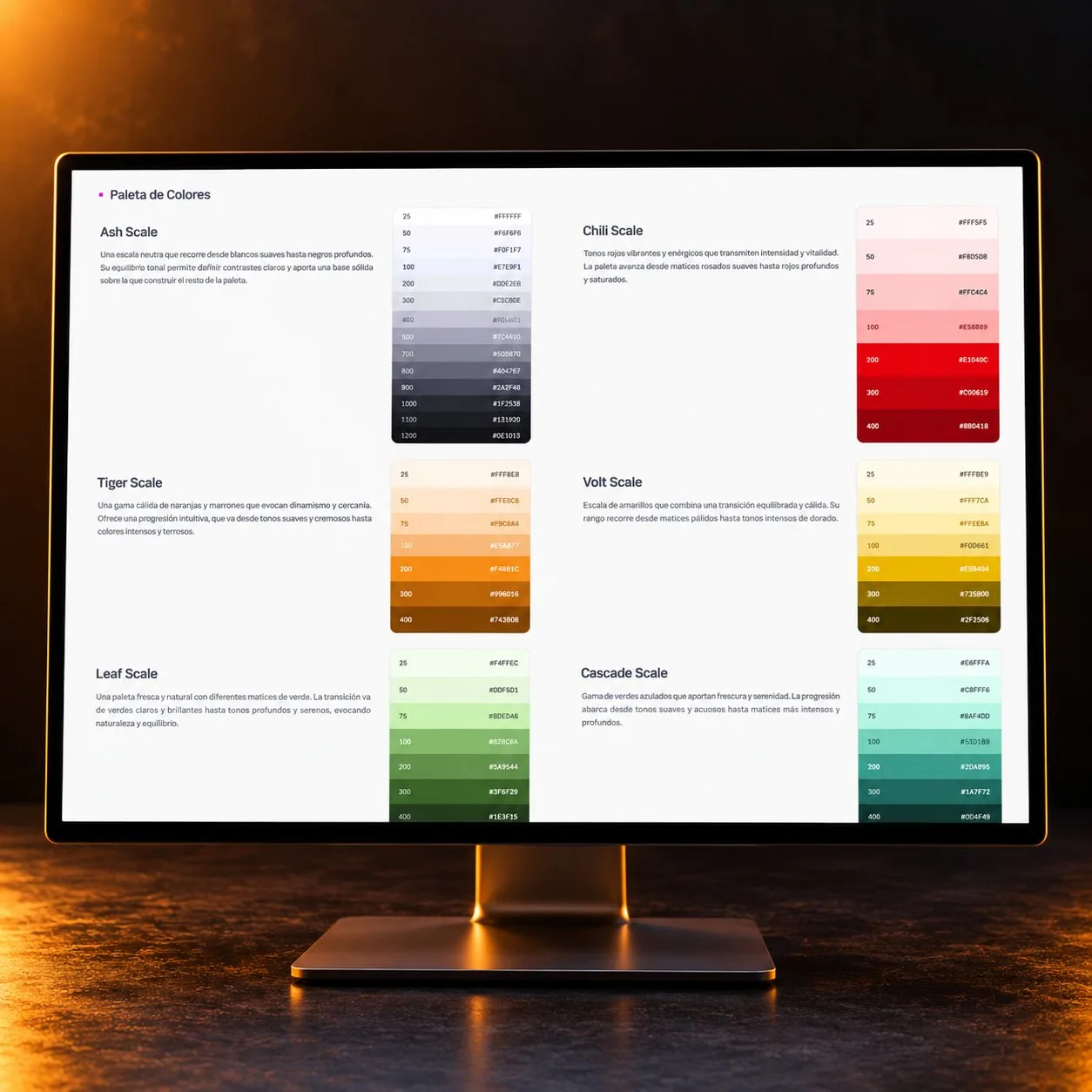
The product was inconsistent from screen to screen, and its frameworks decided how things looked. A system of our own fixed the first and freed us from the second. I organised it in atoms, molecules and organisms, and its biggest piece is the table cell, with 119 variants, because the product is made of tables of live data. Every flow went to development with each screen marked with the component it used and what every control did.
A field notebook that works without coverage
Field technicians wrote their inspections in a paper notebook and typed them into another device later. I designed a digital notebook with the checks to run and fields for the values measured on site. Wind farms have poor coverage, so the design keeps the data on the device during the visit and synchronises by itself when the connection returns. Asking technicians to wait for signal was never an option. It was built for the client that asked for it.
One process for every feature, written into the plan
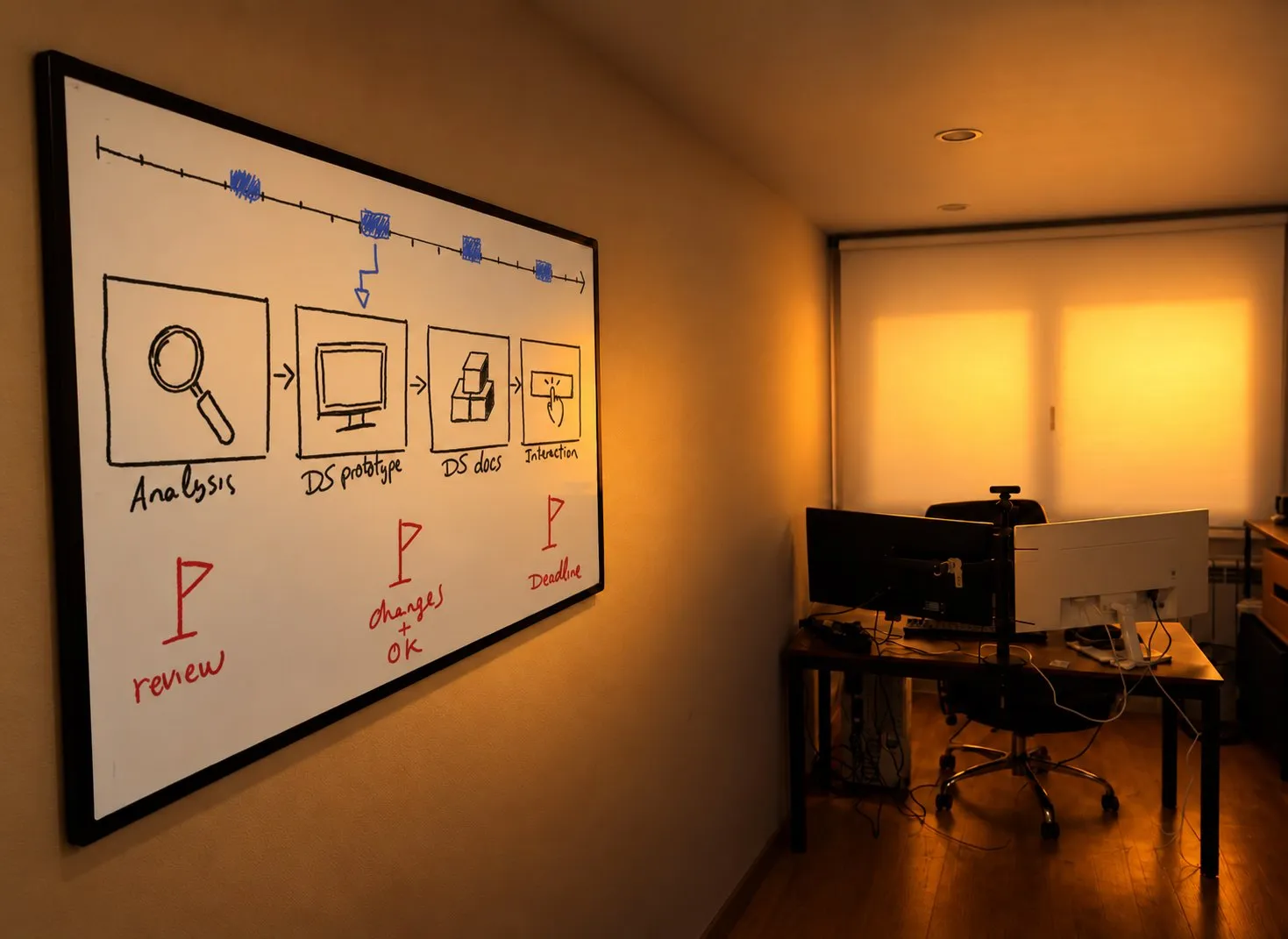
In January 2021 I planned the year of design: 17 features of the new product spread over 26 sprints. Each one follows the same four steps, analysis, desktop prototype, design system documentation and interaction documentation, with three fixed checkpoints: a review meeting, changes and sign-off, and a deadline. Documentation is a step of every feature, not a task for the end.
The results
- The company’s first design system: 31 components with 604 variants
- 20 control diagrams of 13 substations, redrawn with one visual language
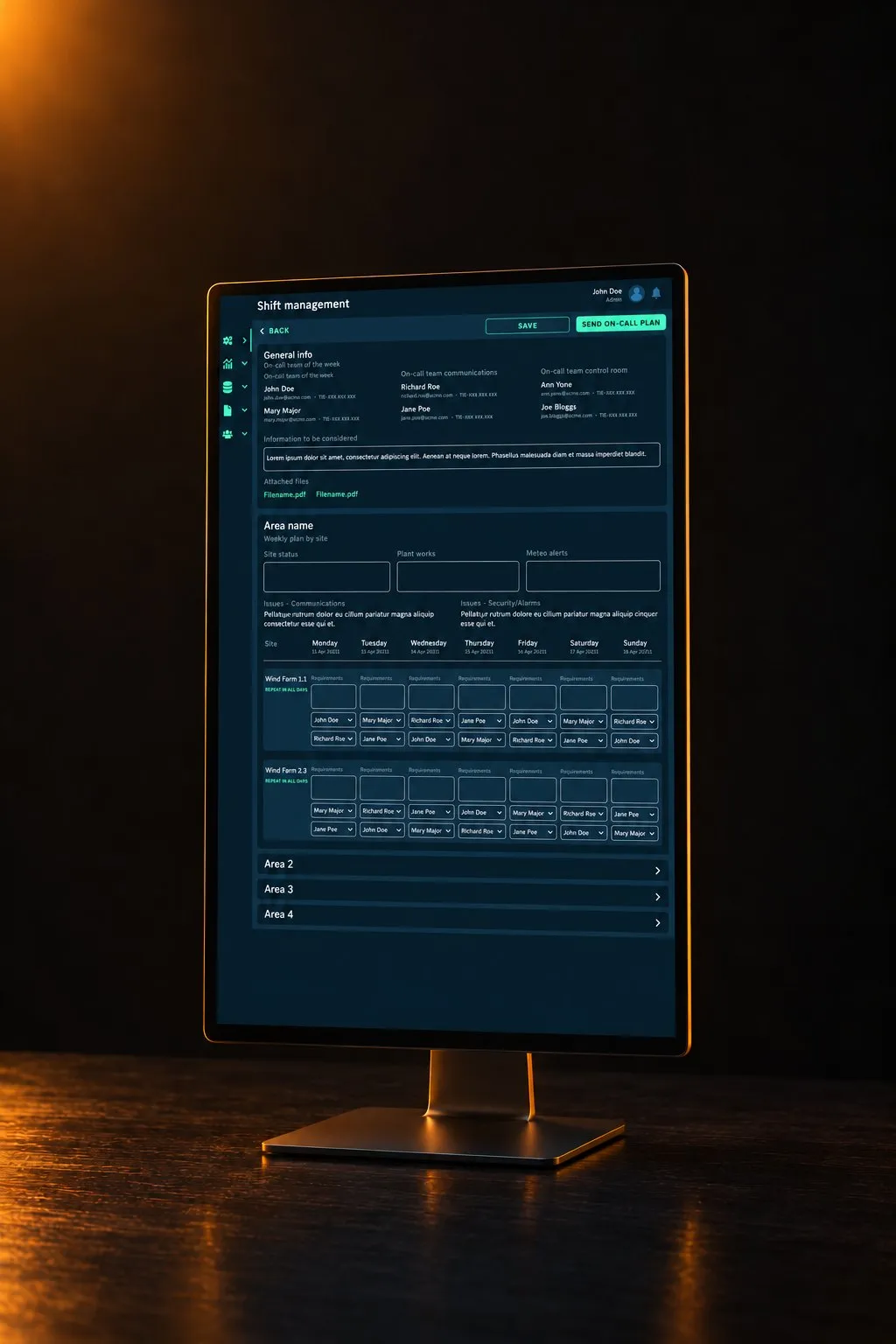
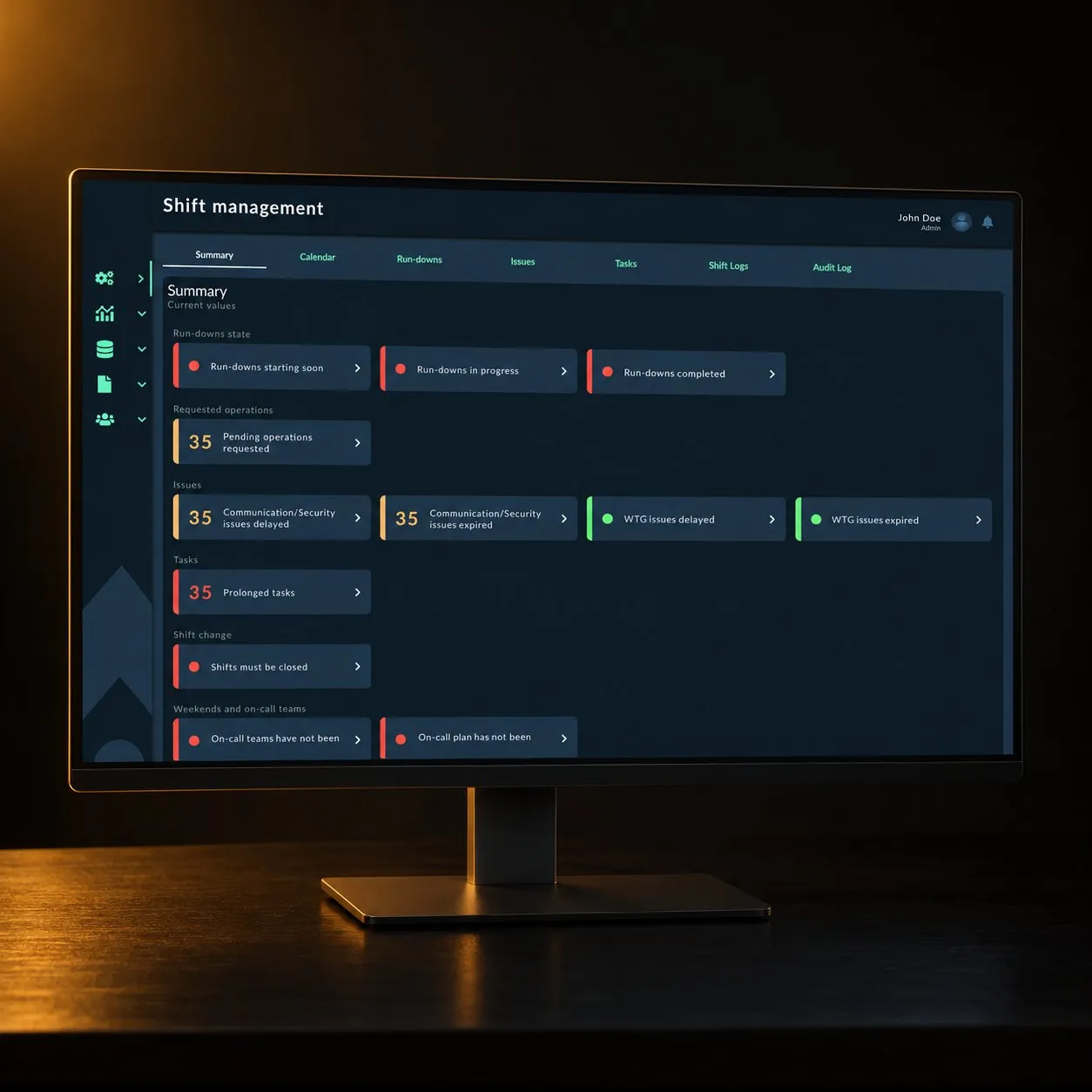
- A shift management tool designed for one client’s control room
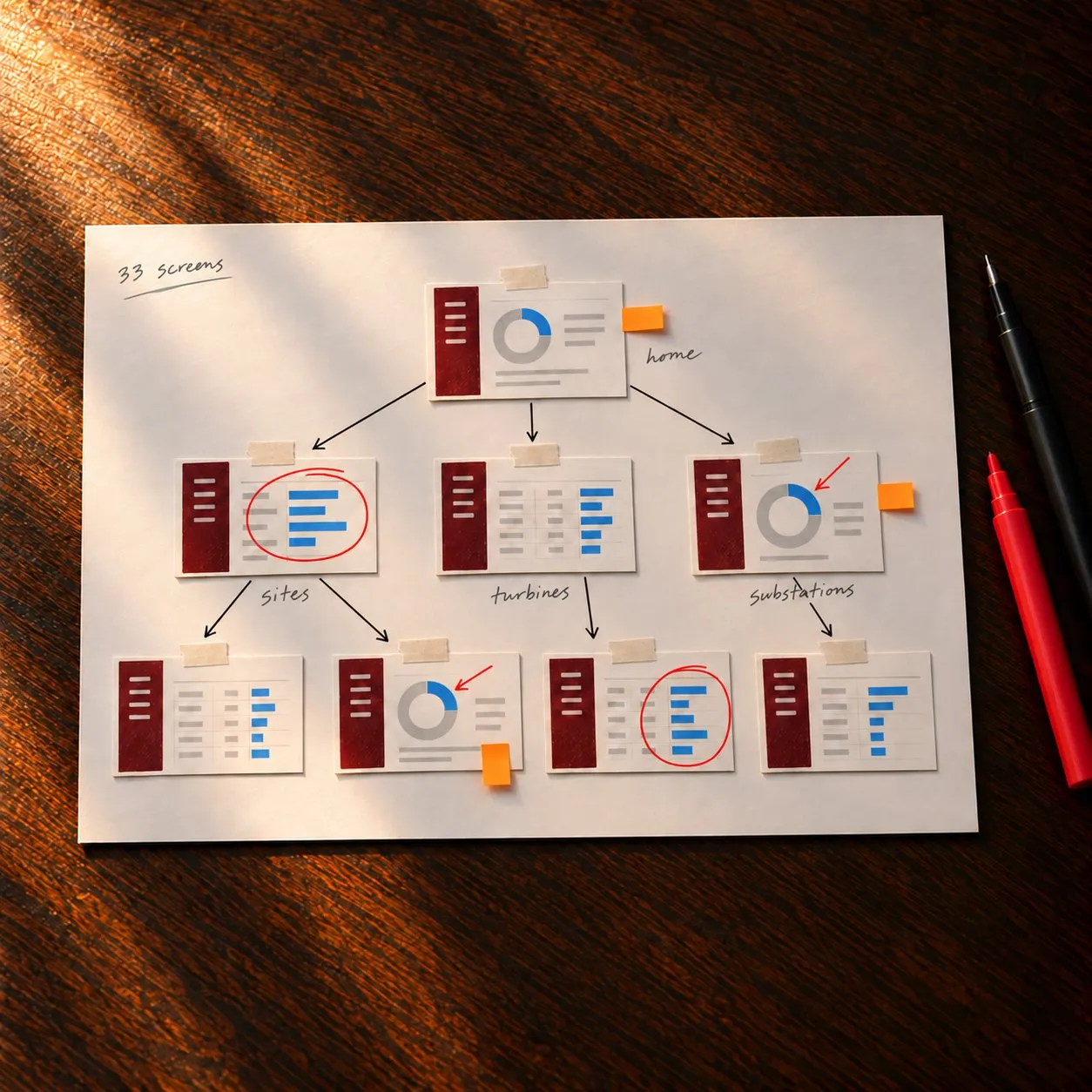
- The successor of the product, mapped and designed feature by feature
- A year of design work planned in 26 sprints
- A paper notebook replaced by a digital one that works offline
What I learned
In a technical domain, modernising an interface starts with understanding the conventions of the people who use it, and keeping them. Working with engineers and operators taught me to tell a change of presentation from a change of meaning. I also learned that a client’s need can open a design conversation that an internal proposal cannot.
Today I would agree a shared way of working, the criteria to prioritise and a base of components much earlier. What I cannot claim is fewer errors or faster work in the control room: I saw parts of these interfaces in production, but nobody measured them, and I left before the new product was finished.
Contact me
If you’ve taken a liking to me and want to get in touch, tell me about the project, the talk or your theories about Area 51. Write to me, or book a call.